Slow drains and backed-up water are a homeowner’s headache, and most of the time you don’t need a plumber’s invoice to fix them. Learning how to clean drain pipes is one of those essential skills that pays for itself the first time you avoid a service call. Whether you’re dealing with kitchen sink sluggishness or bathroom backup, understanding the right approach, and when to call a pro, saves time, money, and frustration. This guide walks you through practical methods to tackle drain pipe cleaning yourself, from simple homemade solutions to mechanical tools that actually work.
Table of Contents
ToggleKey Takeaways
- Drain pipe cleaning prevents costly plumbing emergencies by removing hair, soap scum, and mineral buildup that cause slow drainage, odors, and system damage.
- The baking soda and vinegar method is an effective, chemical-free approach for minor clogs that creates a fizzing reaction to dislodge debris without damaging pipes.
- A drain snake (hand auger) is a reusable, affordable tool ($15–$40) that provides mechanical control over blockages and outperforms chemical drain cleaners for most household clogs.
- Watch for warning signs like slow drainage, recurring clogs, odors, and gurgling sounds—addressing these early prevents water damage, foundation issues, and mold growth.
- Install wire mesh strainers ($2–$5) in all drains and flush weekly with hot water to prevent future clogs, the single best defense against buildup.
- Call a licensed plumber for blockages deeper than your drain snake’s reach, main line clogs, or if you have older galvanized pipes vulnerable to corrosion.
Why Regular Drain Pipe Cleaning Matters
Regular drain pipe cleaning prevents the buildup of hair, soap scum, grease, and mineral deposits that eventually choke your plumbing system. Left unchecked, these accumulations slow drainage, trap odors, and create environments where bacteria thrive. Beyond the unpleasant smells, a clogged drain forces water to back up, which can damage your home’s foundation or create mold growth in walls and crawl spaces.
Clean pipes also extend the lifespan of your entire plumbing system. When water flows freely, there’s less pressure on joints and traps, reducing wear and the risk of leaks. Preventative maintenance is far cheaper than emergency repairs or pipe replacement. Most plumbers recommend flushing drains monthly with hot water, and deeper cleaning every 6–12 months depending on household size and water hardness.
Signs Your Drain Pipes Need Cleaning
Watch for these warning signs that your drain pipes are accumulating buildup. Slow drainage, water pooling in the sink or tub for several seconds, is often the first clue. Recurring clogs, especially in the same spot, suggest debris is collecting in that section of pipe. Unpleasant odors from drains (musty, sewage-like, or rotten smells) indicate decomposing buildup that needs removal.
Gurggling sounds when you flush a toilet or empty a sink happen when air gets trapped in pipes, usually because a partial blockage is forming. If you notice multiple fixtures draining slowly at once (kitchen sink and bathroom sink backing up together), the issue is likely in the main drain line, not individual fixtures. Visible water stains on ceilings or walls beneath drains signal a leak caused by corrosion or blockage pressure. Don’t wait for catastrophic failure, address these signs early.
Essential Tools and Materials for DIY Drain Cleaning
Before starting, gather what you’ll need. Most drain cleaning projects fall into two categories: chemical-free methods using household items, or mechanical tools that physically remove blockages.
Materials for chemical-free cleaning:
• Baking soda (sodium bicarbonate)
• White vinegar (5% acidity standard)
• Boiling water
• Rubber gloves (nitrile or latex)
• Safety goggles
• Wire mesh strainers
Mechanical tools:
• Drain snake (hand-crank auger): 20–50 feet long, costs $15–$40, works well for hair clogs within 10 feet of the drain opening
• Plunger (cup style for sinks, flange style for toilets): effective for traps and near-drain blockages
• Wet/dry shop vacuum: can dislodge clogs via suction (note: turn off before switching wet/dry settings to avoid mold spores)
• Flashlight and mirror: helps you see into drain openings
• Bucket: to catch water and debris
Optional but useful:
• Adjustable wrench (to remove and reattach P-traps safely)
• Old towels
Don’t buy chemical drain cleaners, they’re caustic, dangerous if you splash them on skin, ineffective on stubborn blockages, and they damage older pipes. A $25 drain snake outperforms most of these products.
Step-by-Step Methods to Clean Drain Pipes
Using Baking Soda and Vinegar
This method is safe, effective for minor buildup, and uses items you likely have at home. It works because the chemical reaction between baking soda and vinegar creates carbon dioxide gas that dislodges debris.
- Remove visible debris from the drain opening. If the sink is filled with standing water, use a cup to bail it out into a bucket.
- Pour ½ cup of baking soda directly down the drain.
- Follow immediately with 1 cup of white vinegar. You’ll hear fizzing and bubbling, this is the reaction working.
- Cover the drain opening with a plug or wet cloth to contain the fizz and force it downward through the pipe.
- Let it sit for 15–30 minutes (longer for older, heavier buildup).
- Boil a kettle of water and carefully pour it down the drain to flush out loosened debris.
- Repeat if water still drains slowly.
This method is ideal for hair, soap scum, and organic buildup in kitchen and bathroom drains. It won’t clear severe blockages, but it’s a smart first step before moving to mechanical tools. According to guides on how to clean drains, this natural approach is one of the most effective homemade solutions available.
Drain Snakes and Augers
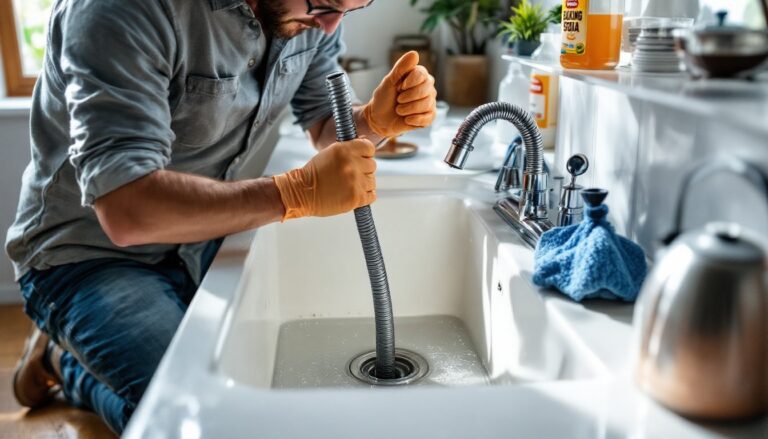
When baking soda and vinegar don’t work, a drain snake, also called a hand auger, is your next move. It’s mechanical, reusable, and gives you direct control over the clog.
- Position a bucket under the drain (metal augers sometimes shed bits of rust or paint, and soapy water will spill out).
- Insert the snake tip into the drain opening. If there’s a strainer, remove it first.
- Crank the handle slowly while pushing forward. The auger will travel down the pipe and encounter resistance (the clog).
- When you feel resistance, work the crank harder, this breaks up the blockage. Avoid forcing violently: patient pressure works better.
- If the clog clears, you’ll feel a sudden drop in resistance. Pull the snake out slowly, allowing dislodged debris to follow.
- Flush the drain with hot water to clear remaining particles.
- For persistent clogs, repeat the process or extend the snake further if it retracts fully without clearing the blockage.
Safety note: Wear nitrile gloves and keep a rag handy, you’ll pull out hair, grease, and decomposed matter that sticks to the auger. If the blockage is deeper than your snake’s reach (usually 20–50 feet), or if you feel uncertain, stop and call a licensed plumber. According to professional DIY drain cleaning techniques, mechanical methods like snakes are among the most reliable tools homeowners can use.
For multiple clogs or main line blockages, professional equipment that rotates at high speed works better than hand augers. This is a good time to call in help rather than risk damaging your pipes or leaving the blockage partially cleared.
Preventing Future Drain Clogs and Buildup
Once you’ve cleared your drains, preventative habits keep them flowing freely. Install wire mesh strainers in every sink and shower drain to catch hair and solid debris before it enters the pipe. These cost $2–$5 and are the single best defense against clogs.
Flush drains weekly with hot water, just boil a kettle and pour slowly. In hard water areas, monthly baking soda and vinegar flushes reduce mineral deposits. Never pour grease down the kitchen sink: let it cool, solidify, and throw it in the trash. Dispose of food scraps properly, and avoid using “flushable” wipes in toilets (they don’t actually break down and clog main lines regularly).
If you have older galvanized steel pipes, avoid aggressive snaking repeatedly, corrosion weakens the metal, and repeated mechanical stress can create tiny leaks inside walls. Instead, maintain them with gentler monthly flushes. Learning the right way to unclog drains also means knowing when to use gentler methods first and escalate only if needed. For townhouses or older homes on septic systems, keep an eye on drain tree roots, this requires a professional camera inspection and, if necessary, root-cutting service.