A slow-draining sink or gurgling shower isn’t just annoying, it’s a sign that buildup is accumulating in your pipes. Whether you’re dealing with hair, grease, mineral deposits, or soap scum, drain cleaning in Pasadena homes is a task most homeowners face regularly. The good news? Many clogs can be cleared without calling a plumber, especially if you catch them early. This guide walks you through practical DIY drain cleaning methods, explains what Pasadena’s specific water and soil conditions mean for your plumbing, and shows you when it’s time to bring in a professional.
Table of Contents
ToggleKey Takeaways
- Pasadena’s hard water and clay-rich soil accelerate mineral buildup and grease solidification in drains, making regular maintenance essential for homeowners in the area.
- The plunger technique works for roughly 70% of slow drains, while the baking soda and vinegar method safely breaks down grease and mineral deposits without harsh chemicals that can damage old pipes.
- For drain cleaning in Pasadena homes, early intervention prevents minor clogs from becoming expensive $300+ professional repairs that could have been avoided with timely DIY action.
- Call a professional plumber if you experience complete blockages, multiple slow drains indicating main-line issues, sewage smells, or if your home is older than 40 years with cast-iron pipes prone to breakage.
- Monthly baking soda flushes and prompt attention to slow-draining sinks and showers will keep your drainage system functioning properly and avoid costly backup issues.
Common Drain Problems in Pasadena Homes
Pasadena’s water quality and soil composition create specific drainage challenges. The area’s hard water, high in minerals like calcium and magnesium, leaves deposits inside pipes over time, gradually narrowing the passage for water. You’ll notice this as slower drains that worsen gradually rather than suddenly.
Hair is the most obvious culprit in bathrooms. Bathroom drains in Pasadena homes clog roughly the same way anywhere else, but hard water accelerates mineral buildup on top of the hair. Kitchen drains face a different problem: grease solidifies faster in hard water, coating pipe walls and trapping food particles.
Outdoor drainage in Pasadena can be complicated by the area’s clay-rich soil, which doesn’t drain as quickly as sandy soil. This can create standing water around foundations and affect how your home’s main drainage line performs, especially during heavy rain.
A slow drain that still functions isn’t an emergency, but it’s a signal to act. Waiting lets the blockage get worse, potentially turning a 20-minute DIY job into a $300+ professional extraction. Most Pasadena homeowners start noticing drain slowness in the hot months when water usage increases.
DIY Drain Cleaning Methods That Actually Work
Before you reach for chemical drain cleaners, which are hard on old pipes and Pasadena’s water table, try these proven methods. They’re safer, cheaper, and gentler on your plumbing.
The Plunger Technique
A simple plunger is your first-line tool, and it works for roughly 70% of slow drains. The key is creating a proper seal and generating real pressure.
For sink drains: Fill the sink with 3–4 inches of water. Block the overflow hole (if your sink has one) with a wet cloth. Place the plunger cup directly over the drain opening and pump vigorously for 15–20 seconds without breaking the seal. You should hear and feel suction. Repeat 5–10 times. If water starts draining faster, keep going for another 30 seconds, then run hot water to flush debris.
For shower and bathtub drains: Remove the drain cover or strainer first. Fill the tub with enough water to cover the plunger cup by 1–2 inches. Place the plunger over the drain, block the overflow with a wet cloth, and pump hard for 20–30 seconds. Shower drains are often more stubborn because hair gets packed tight, be prepared to repeat 2–3 times.
Important: If you live in an older Pasadena home with cast-iron drains, use a cup plunger gently. Aggressive plunging can crack old pipes. If you feel unusual resistance, stop and try a different method.
Baking Soda and Vinegar Solution
This method breaks down grease and mineral deposits without harsh chemicals. It’s especially effective for slow kitchen drains and works better than many people expect.
What you’ll need: Baking soda, white vinegar, boiling water, a kettle, and a drain plug or rag.
Steps:
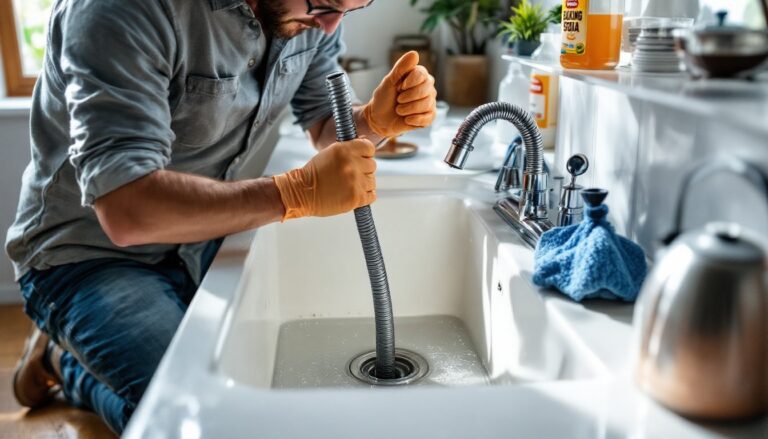
- Remove any visible debris from the drain opening. Use a bent wire coat hanger or drain snake to pull out hair clumps, this step saves time later.
- Pour 1/2 cup of baking soda directly into the drain. Use a spoon to push it down as far as it’ll go.
- Immediately follow with 1/2 cup of white vinegar. You’ll see fizzing and hear bubbling, that’s the reaction breaking down buildup. Plug the drain with a rag or drain stopper to keep the reaction focused inside the pipe.
- Wait 15–30 minutes. The longer you wait, the more time the baking soda and vinegar have to work. For really slow drains, leave it overnight.
- Boil a kettle of water (about 2 quarts). Carefully pour it down the drain in a steady stream. The hot water flushes away loosened debris and mineral deposits.
- Run hot tap water for another 30 seconds to rinse.
Why it works: The fizzing action scrubs pipe walls and helps lift accumulated buildup. It won’t clear a completely clogged drain, but it’s perfect for slowing drains and maintaining pipes between deeper cleanings. For stubborn kitchen drains, repeat the process twice in one week.
For Pasadena’s hard-water deposits specifically, baking soda is gentler than vinegar alone but more effective than water. This method also won’t damage old plumbing or harm your septic system if you have one.
When To Call a Professional Drain Cleaner
Not every drain problem is DIY-friendly, and knowing your limits saves money and prevents damage.
Call a professional if:
- The drain is completely blocked. Water won’t flow at all, or it backs up into the tub or sink. This usually requires a motorized drain snake or hydro-jetting, which needs a licensed plumber.
- Multiple drains are slow or backing up. This points to a problem in your main sewer line, not an individual fixture. DIY methods won’t help, and you need someone with camera equipment to diagnose the issue.
- You smell sewage. This indicates a serious leak or blockage in the main line. Call a professional immediately, this is a health hazard.
- Your home is older than 40 years. Pasadena has many pre-1980s homes with cast-iron or clay pipes that can break under pressure from drain snakes. A professional will assess your pipe type before using equipment.
- You’ve tried DIY methods twice and nothing worked. Repeated attempts can damage pipes. Stop and get professional help.
- You’re seeing water in your yard or foundation. This suggests external drainage failure, not an indoor clog. You’ll need an experienced contractor.
The top drain cleaning companies in Pasadena, CA have pricing that typically starts at $150–$250 for a basic service call, with additional charges for more complex work. You can find professional drain cleaners in Pasadena with ratings and pricing to compare. For estimating costs on larger projects, tools like HomeAdvisor and ImproveNet help you understand market rates and find vetted contractors in your area.
Before calling, let the professional know if you’ve used any chemical drain cleaners. This information helps them choose the safest removal method and prevents chemical reactions inside the pipes.
Conclusion
Most Pasadena drain clogs respond well to a plunger or baking soda-and-vinegar treatment, especially if you tackle them early. Start simple, be patient, and don’t force anything if you feel unusual resistance. When DIY doesn’t work or you’re facing a bigger issue like a main-line problem, a professional plumber is worth the cost. Keep your drains maintained with monthly baking soda flushes, and you’ll avoid the frustration of backups down the road.