Austin’s warm climate and aging infrastructure create a perfect storm for drainage problems. Whether you’re dealing with slow drains, backed-up water, or mysterious gurgling sounds, drain issues are a headache no homeowner wants to face. The good news? Many drain problems are preventable, and some you can tackle yourself before they spiral into expensive plumbing emergencies. This guide walks you through the why, what, and when of drain cleaning in Austin, so you know exactly what to do when your pipes start misbehaving.
Table of Contents
ToggleKey Takeaways
- Austin’s limestone bedrock, hard water, and aggressive tree roots make drain cleaning more critical here than in other regions, with homes built before 1980 facing the greatest risk.
- Slow drains, gurgling sounds, foul odors, and sewage backups are warning signs that drain cleaning services may be needed to prevent costly plumbing emergencies.
- DIY drain cleaning using baking soda and vinegar or a hand-crank snake can resolve many common blockages before professional intervention becomes necessary.
- Professional drain cleaning is essential for main line blockages, recurring clogs, and root intrusion, especially when camera inspection and motorized equipment are required.
- Simple preventative measures like hair traps ($3–$8), avoiding grease disposal, boiling water flushes, and professional maintenance every 1–2 years significantly reduce drain problems in Austin.
- Installing a whole-house water softener reduces mineral scale buildup and extends pipe life, complementing regular drain cleaning and maintenance efforts.
Why Austin Drains Clog More Frequently Than Other Areas
Austin’s unique geology and weather patterns make drain clogs more common than in other parts of the country. The city sits on limestone bedrock, and when soil shifts, especially during dry spells followed by heavy rain, it puts stress on underground pipes and creates settling that causes misalignments and blockages.
The hard water here is another culprit. Austin’s water contains high levels of calcium and magnesium, which accumulate inside pipes over time, reducing flow and trapping debris. Unlike soft-water cities where water slides through more freely, Austin drains work harder and get clogged faster.
Add Texas heat to the mix: tree roots thrive and grow aggressively toward water sources, and PVC pipes expand and contract with temperature swings. Old cast-iron drains are especially vulnerable, they rust from the inside out, creating rough spots where hair, soap, and food particles stick. If your home was built before 1980, you’re almost certainly fighting this battle.
Signs Your Drains Need Professional Cleaning
Knowing when to act prevents a slow drain from becoming a flooded bathroom. Watch for these red flags.
Slow drains that don’t respond to a plunger are the first warning sign. Water pooling around your feet in the shower, or taking 30 seconds to empty a sink, means something’s blocking the line. Gurgling sounds coming from drains, especially when using the toilet or running the washing machine, signal trapped air and partial blockages further down the line.
Foul odors are your nose telling you decomposing material is stuck in the pipes. Repeated clogs in the same drain suggest a localized blockage (like at a bend), while multiple drains backing up simultaneously points to a main line issue, this one definitely needs professional attention. Sewage backing up into your home is the emergency trigger: stop using that drain immediately and call a licensed plumber.
Damp patches in your yard, unusually green spots in grass, or soft ground near your cleanout access point also signal underground leaks or breaks that require inspection with a camera.
DIY Drain Cleaning Methods That Actually Work
Before spending $200+ on a service call, try these proven techniques. They won’t fix a broken pipe, but they’ll clear many common blockages.
The Baking Soda and Vinegar Method
This isn’t just internet mythology, it works on grease and organic debris. Pour ½ cup of baking soda down the drain, followed by ½ cup of white vinegar. Cover the drain opening with a plug or cloth for 15 minutes while the chemical reaction breaks apart buildup. Flush with a kettle of boiling water. For stubborn clogs, repeat twice.
Why it works: The fizzing action dislodges trapped material, and vinegar’s mild acid cuts through soap scum and grease. It won’t clear a solid clog, but it’ll restore flow in slow drains and kill odor-causing bacteria.
Using a Plunger and Snake Properly
A cup plunger works best for sinks and tubs, the flat bottom creates a seal. Fill the sink with a few inches of water to cover the cup, then plunge vigorously 15 to 20 times. The pressure and suction movement can dislodge debris just past the drain opening.
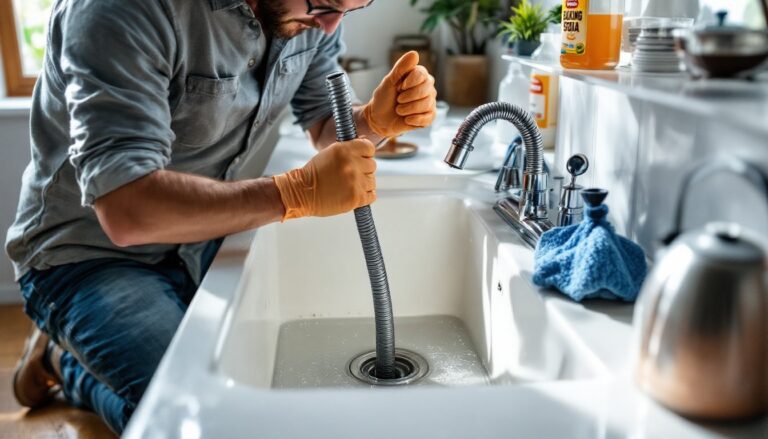
For deeper blockages, a hand-crank drain snake (also called a plumbing auger) breaks through clogs. Insert the snake into the drain, crank the handle as you push forward, and pull back when you feel resistance, you’re either breaking up the clog or snagging hair and debris. A standard 25-foot ¼-inch cable handles most kitchen and bathroom drains without damaging pipes.
Important: Don’t use chemical drain cleaners before snaking, caustic liquid on your skin while you’re bent over a drain is a burn waiting to happen. If the snake gets stuck, stop and call a pro rather than forcing it.
When to Call a Professional Drain Cleaner in Austin
Some situations demand licensed plumbers with proper equipment and insurance.
Main line blockages (sewage backing into multiple fixtures, wet spots in the yard, or a gurgling toilet that affects the whole house) need a professional with a motorized ¾-inch or 1-inch snake and often a sewer camera to see what’s happening underground. Roots, breaks, and misaligned joints are beyond DIY scope.
Recurring clogs in the same spot after you’ve tried plunging and snaking suggest structural problems, a collapsed section, mineral buildup in old pipes, or roots penetrating the line. A camera inspection reveals the exact issue so the plumber can recommend repair versus replacement.
Tree root intrusion is serious and common in Austin. Roots follow moisture and can crack cast-iron or clay pipes. They need either root-killing chemicals (temporary) or trenchless pipe repair (permanent but expensive). Top-rated professionals in Austin can handle both, check homeadvisor for local drain cleaning experts in Austin and how much drain cleaning typically costs in Austin before calling.
If you rent: Check your lease. Most landlords or property managers handle drain issues at their expense. Report it immediately and document the problem with photos.
Preventative Maintenance Tips for Austin Homeowners
An ounce of prevention truly beats a pound of cure when it comes to drains.
Hair and debris traps cost $3 to $8 and catch 80% of what clogs bathroom drains. Pop one into your shower and tub drains, and clean it weekly.
Never pour grease down the kitchen sink, even if it’s hot and liquid. It solidifies as it cools and coats your pipes like cholesterol in an artery. Let grease cool in a container and throw it in the trash. Avoid putting fibrous foods (celery, carrot peels, potato skins) down the garbage disposal, use a compost bin instead.
Run hot water after every use to flush soap and debris. Once a week, run a kettle of boiling water down each drain. This keeps mineral buildup and grease from accumulating.
Schedule professional drain maintenance every 1 to 2 years if your home is over 30 years old or you’re seeing slow drains even after prevention. A plumber can use a motorized snake or hydrojetting to remove buildup before it becomes a problem. Family Handyman offers detailed guides on preventative plumbing maintenance if you want to learn more about system upkeep.
Install a whole-house water softener if you’re dealing with serious hard water issues. It won’t prevent all clogs, but it’ll reduce mineral scale inside pipes and extend their life by years.