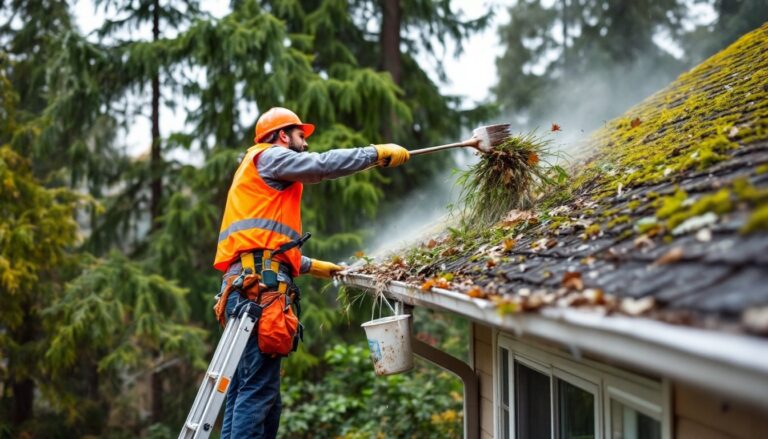
Cleveland’s weather, heavy spring rains, autumn leaves, and winter snow, puts real pressure on gutters. Without regular cleaning, debris builds up quickly, causing water to back up under your roof shingles and seep into your fascia and foundation. A clogged gutter system is one of the fastest ways to turn a minor maintenance issue into costly water damage. Whether you’re a DIY-er ready to grab a ladder or someone considering hiring help, this guide covers everything you need to know about gutter cleaning in Cleveland, from seasonal timing and safety to cost expectations and long-term prevention.
Table of Contents
ToggleKey Takeaways
- Regular gutter cleaning in Cleveland should happen at least twice yearly to prevent water damage, mold, and structural issues caused by the region’s heavy rains, snowfall, and abundant tree debris.
- DIY gutter cleaning requires proper safety precautions including a stable ladder, non-slip footwear, the three-point rule, and ideally a helper—ladder accidents are the leading cause of home injuries.
- Professional gutter cleaning services in Cleveland range from $150–$400 for single-story homes and $250–$600+ for two-story homes, making them worthwhile for two-story homes, heavy clogs, or those uncomfortable on ladders.
- Gutter guards and downspout extensions can reduce future gutter cleaning frequency and prevent water damage, though they require occasional maintenance in Cleveland’s high-debris environment.
- After clearing debris and flushing gutters with a hose, inspect the downspout and entire system for damage, sagging, or separation from the fascia to catch costly problems early.
Why Regular Gutter Cleaning Matters in Cleveland’s Climate
Cleveland gets roughly 38 inches of rain annually, plus significant snowfall and ice in winter. Add in the abundant trees throughout the metro area, and you’ve got a perfect recipe for gutter clogs. Leaves, twigs, shingle grit, and silt accumulate faster here than in drier regions.
When gutters fill with debris, water can’t drain properly. It pools against your fascia board, the trim that holds your gutter system, and seeps behind it. From there, water infiltrates your soffit, attic, and eventually the interior walls of your home. Even a small leak can lead to wood rot, mold growth, and structural damage that costs thousands to repair. In Cleveland’s freeze-thaw cycles, trapped water can also expand and crack gutters or pull them away from the house.
Regular cleaning, at least twice yearly, or more if you have heavy tree coverage, prevents these headaches. Spring and fall are ideal times in Cleveland: spring clears winter debris and allows gutters to handle the rainy season ahead, while fall cleans out leaf litter before winter.
DIY Gutter Cleaning: Tools, Safety Tips, and Step-by-Step Instructions
Essential Tools and Materials You’ll Need
Before climbing a ladder, gather these items:
• Sturdy extension ladder (20–28 feet for single-story: consult the manufacturer’s weight rating)
• Work gloves (leather or heavy-duty rubber: gutters have sharp edges and rough debris)
• Safety goggles (flying debris from power washers or hand scraping can irritate eyes)
• Gutter scoop or small shovel (plastic is safer for aluminum gutters: metal for steel)
• 5-gallon bucket (tied to the ladder with rope, not balanced on a rung)
• Garden hose with spray nozzle or pressure washer (1,500–2,000 PSI maximum: higher pressures damage aluminum)
• Hose extension or telescoping wand (reach gutters without constantly repositioning the ladder)
• Handheld dustpan and brush (for final debris from the ladder)
Optional but helpful: Shop towels, a small tarp to catch runoff (to protect landscaping), and a second person to stabilize the ladder.
Safety Precautions Before You Start
Ladder accidents are the leading cause of home injuries. Take these steps seriously:
- Inspect the ladder before use. Check for dents, cracks, or bent rungs. Set it on level ground: use a level to confirm. Uneven footing causes tipping.
- **Wear non-slip footwear, not socks or smooth-soled shoes. Your feet need grip on both the ladder rungs and roof surfaces.
- Use the three-point rule: Always have two hands and one foot (or two feet and one hand) in contact with the ladder. Never stretch: reposition instead. Reaching is the second-leading cause of ladder falls.
- Tie the ladder to a secure point (downspout bracket, roof beam, or a helper holding the base). High winds in Cleveland can be a hazard.
- **Wear safety goggles and gloves throughout. Even if you’re wearing glasses, goggles add protection from water splash and debris flecks.
- Never use a ladder near power lines. If your gutters or downspouts are within 10 feet of power lines, stop and call a professional. Electrocution is a real risk.
- Work during daylight and in dry conditions. Wet ladders and gutters are slippery: shadows hide debris.
- Don’t work alone. A helper can steady the ladder, hand you tools, and call for help if you fall.
If you’re uncomfortable on a ladder, experiencing balance issues, or have mobility concerns, hire a professional. No cleaning job is worth a hospital visit.
Step-by-Step Cleaning Process
- Set up safely: Position the ladder at a slight angle (one foot out for every four feet of height). Have your helper hold the base or tie it off. Place your bucket on the ladder using a rope, not balanced on a rung.
- Scoop debris by hand: Starting at the downspout end, use your gutter scoop to pull leaves, twigs, and silt into the bucket. Work toward the opposite end, leaving the downspout area for last.
- Clear the downspout: Gently probe the downspout opening with your hand or a plumbing snake. If it’s clogged, water won’t drain and your cleaning effort is wasted. Many clogs are just matted leaves: pull them out by hand if possible.
- Flush the gutters: Once loose debris is gone, use your hose (or pressure washer at low PSI) to rinse the gutter channel and verify water flows freely into the downspout. Watch for standing water: if it pools, the gutter may be sagging or the downspout is still partially blocked.
- Test downspout flow: Direct hose water into the downspout opening and confirm it exits cleanly at the base. If water backs up, the downspout is clogged deeper in the line: use a plumbing snake or pressure washer (carefully) to clear it.
- Inspect for damage: Look for dents, holes, rust spots, or sections pulling away from the fascia. Note any issues for repair planning.
The whole process typically takes 2–4 hours for a single-story home, depending on debris volume and gutter length. Don’t rush: hurrying leads to mistakes and falls.
When to Call a Professional Gutter Cleaning Service in Cleveland
DIY cleaning works for many homeowners, but some situations demand professional help:
• Two-story homes or steep roofs: Reaching second-story gutters safely requires longer ladders and more experience. One misstep on a tall ladder can be catastrophic.
• Heavy clogs or downspout damage: If debris is compacted or the downspout is bent, cracked, or disconnected, professionals have the tools (power washers, plumbing equipment, replacement parts) to fix it.
• Gutters pulling away from the fascia: This signals loose hangers or fasteners. A professional can reattach or replace them: improper repair can worsen the problem.
• Existing health issues, balance problems, or lack of confidence on ladders: Your safety is non-negotiable. Hire help.
• Limited time or physical ability: Even young, fit homeowners sometimes don’t have a free weekend. A service cleans gutters in an hour or two.
Cleveland has many local gutter cleaning companies. When comparing options, ask about insurance (they should carry liability), whether they inspect gutters for damage, and their policy on downspout cleaning. You can browse top-rated gutter cleaning professionals in Cleveland, OH to see reviews and get local referrals.
Average Gutter Cleaning Costs and What to Expect
DIY cleaning costs $50–$150 if you already own a ladder, or $100–$300 if you need to rent or buy equipment. Your main expenses are a quality ladder (reusable, so cost amortizes) and a gutter scoop or hand tools.
Professional service in Cleveland typically runs $150–$400 for a single-story home and $250–$600+ for two-story homes, depending on:
• Gutter length (linear footage)
• Debris volume (heavy leaf coverage costs more)
• Downspout cleaning (many companies include it: some charge extra)
• Minor repairs (reattaching hangers, sealing small holes, often quoted separately)
• Frequency discounts (many services offer 10–20% off if you schedule spring and fall appointments)
Regional variations matter: rural areas may charge less than greater Cleveland. Labor rates also fluctuate seasonally, spring and fall (peak cleaning season) cost more than winter.
For cost estimates tailored to your home, tools like HomeAdvisor’s cost estimator or ImproveNet’s project planning guides can help you compare local contractor rates and get a ballpark figure before calling for quotes.
Prevent Future Buildup: Gutter Guards and Maintenance Tips
The best gutter cleaning is the one you don’t have to do as often. After your next cleaning, consider these prevention strategies:
Gutter guards (also called gutter covers or screens) block leaves and twigs while allowing water through. Types include mesh screens ($1–$3 per linear foot), snap-on covers ($2–$5 per foot), reverse-curve systems ($5–$10+ per foot, professional installation), and helmet guards (solid covers with a rounded top). None are 100% effective in heavy leaf zones like Cleveland, but they reduce cleaning frequency from twice yearly to once or twice annually. If you install them, choose a style that’s easy to remove for maintenance, you’ll still need to clean the gutters, just less often.
Downspout extensions (4–6 feet long) direct water away from the foundation, reducing basement moisture and grading issues. These cost $15–$50 and often prevent larger water damage problems.
Roof maintenance matters too. Asphalt shingles shed grit, especially in their first year: this debris accumulates in gutters. Regular roof cleaning reduces gutter silt buildup. Also, trim tree branches overhanging your roof to minimize leaf drop.
Annual inspections catch small problems before they become expensive. Walk around your home after heavy storms to look for sagging gutters, water streaks on the fascia, or water pooling against the foundation. Address issues promptly: the cost of a small repair is far less than water damage restoration.
Seasonal flushing between major cleanings helps too. After significant wind or heavy rain, spend 10 minutes with a hose running water through gutters to ensure they’re draining freely.