Olympia’s Pacific Northwest climate brings plenty of rain, which means gutters work overtime funneling water away from your home’s foundation, siding, and landscaping. When gutters clog with leaves, pine needles, and debris, they can’t do their job, and water damage follows fast. Whether you’re tackling gutter cleaning in Olympia yourself or bringing in a pro, understanding your options keeps your home protected and your wallet in check. This guide walks you through DIY maintenance, safety essentials, and when it’s time to call an expert.
Table of Contents
ToggleKey Takeaways
- Gutter cleaning in Olympia is essential twice yearly due to the region’s 50+ inches of annual rainfall, which prevents ice dams, foundation damage, and costly repairs exceeding $2,000.
- DIY gutter cleaning requires proper safety equipment including a sturdy ladder, work gloves, safety glasses, and a spotter, with the entire process taking 2–4 hours for average homes.
- Professional gutter cleaning in Olympia typically costs $150–$400 per visit and is recommended for multi-story homes, steep roofs, or when gutters show rust, separated seams, or pest damage.
- Preventative maintenance like trimming overhanging branches 5–10 feet from your roofline and installing downspout extensions significantly reduces debris buildup and protects your foundation.
- Gutter guards or leaf screens can cut cleaning frequency in half, though they aren’t foolproof and still require occasional maintenance in the Pacific Northwest’s damp climate.
Why Gutter Cleaning Matters in Olympia’s Rainy Climate
Olympia receives over 50 inches of annual rainfall, and much of it falls during fall and winter when leaves and needles pile up fastest. Clogged gutters don’t just overflow, they create standing water that breeds mosquitoes and ice dams in winter, both expensive problems. Water spilling behind gutters rots fascia boards (the trim connecting gutter to roof), undermines foundation support, and stains siding. A single season of neglect can lead to $2,000+ in repairs.
Your gutters are your first line of defense against water damage, working silently to channel millions of gallons away from your home’s structure. In the Pacific Northwest, gutter cleaning typically needs attention twice yearly, once after spring pollen season and again in late fall. Homeowners who stay on top of gutter maintenance avoid ice dams, basement flooding, and expensive foundation work. It’s one of those preventative projects that saves money in the long run, even if it feels tedious to schedule.
DIY Gutter Cleaning: Tools, Steps, and Safety Tips
If you’re comfortable on a ladder and don’t mind getting your hands dirty, DIY gutter cleaning is straightforward, just respect the risks. You’ll be working at height, often wet surfaces, so safety comes first every time.
Essential Tools and Equipment You’ll Need
- Sturdy extension ladder (24–28 feet for single-story homes: check weight rating)
- Stabilizer bar or standoff (keeps ladder from tilting into gutters)
- Heavy-duty work gloves (leather or nitrile: gutter debris is sharp and dirty)
- Safety glasses or goggles (debris flies when you scoop)
- Gutter scoop or small shovel (plastic won’t damage gutters like metal can)
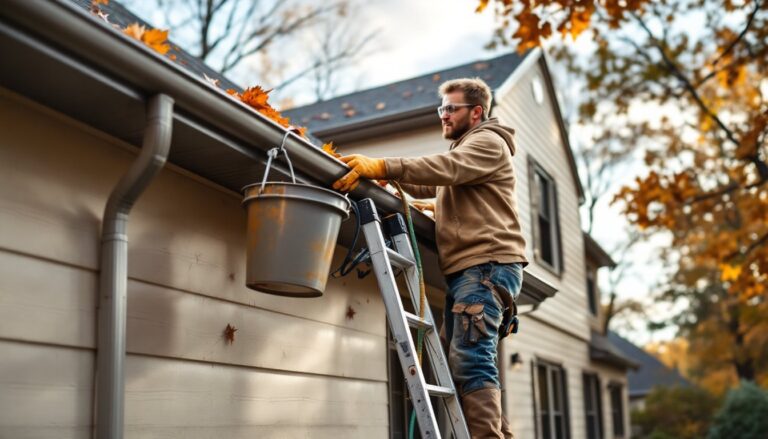
- 5-gallon bucket with carabiner clip (hooks to ladder to catch debris)
- Garden hose with spray nozzle (flush debris downstream)
- Wet/dry shop vac (optional but cuts cleanup time in half)
Wear long sleeves, non-slip shoes, and consider a dust mask if allergies are an issue. Never work alone, and avoid cleaning during rain or on windy days, ladder stability matters.
Step-by-Step Cleaning Process
-
Set up your ladder safely. Position it so you can reach the gutter without leaning sideways. Use the three-point contact rule: two hands and one foot (or two feet and one hand) touching the ladder at all times. Have a spotter stationed below.
-
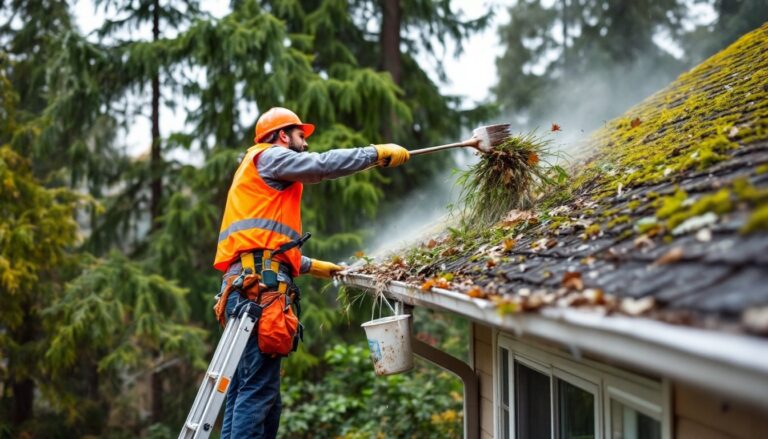
Scoop out large debris. Use your gutter scoop to remove leaves, pine needles, and buildup. Work from the outlet (downspout area) toward the far end, dropping debris into your bucket.
-
Flush with water. After scooping, use your hose to flush the gutter, pushing remaining silt and small particles toward the downspout. Check that water flows freely into the downspout.
-
Clear downspout blockages. If water doesn’t drain quickly, your downspout is likely clogged. Use a plumbing snake or pressure washer (on low pressure) to clear the line. You can also disconnect the downspout temporarily and run water backward through it.
-
Inspect for damage. Look for rust spots, separated seams, or sagging sections. Minor gaps can be sealed with gutter sealant: larger damage may need professional repair.
The whole job typically takes 2–4 hours for an average single-story home, depending on debris load and gutter length.
When to Call a Professional Gutter Cleaner in Olympia
Some jobs belong in a pro’s hands. If your home has two or more stories, steep roofs, or significant overhanging branches, professional cleaning is worth the cost and safety peace of mind. Professionals carry insurance (so if a ladder slips, you’re protected), have access to commercial-grade equipment, and can spot problems you’d miss.
You’ll also want a pro if gutters show serious rust, separated seams, or signs of pest nests. Some cleaners in Olympia offer gutter guards (mesh or solid covers) that reduce cleaning frequency, something worth discussing. According to reviews of top-rated gutter cleaning professionals in Olympia, WA, most charge between $150–$400 per visit depending on home size and debris load. It’s a small price for safety and thoroughness, especially if height or physical limitations are factors.
Gutter Maintenance and Prevention Tips for Pacific Northwest Homes
The best gutter maintenance strategy combines regular cleaning with upgrades that reduce workload. If you’re tired of ladder work, gutter guards or leaf screens fit over existing gutters and block most debris while allowing water through. They’re not foolproof, wind can blow fine sediment underneath, but they cut cleaning frequency in half.
Trimming overhanging branches 5–10 feet back from your roofline cuts debris at the source. It improves sunlight exposure too, which dries wet spots and prevents mold. In Olympia’s damp climate, that’s a win. You can also install downspout extensions (4–6 feet long) to direct water farther from your foundation: they’re cheap insurance against basement flooding.
If you’re planning more extensive repairs or considering full gutter replacement, resources like HomeAdvisor help estimate costs and connect you with vetted contractors. Tools like ImproveNet also provide project guides tailored to your region. Check your local Olympia building codes, some jurisdictions require permits for gutter work on older homes, especially if fascia replacement is involved. Your city’s planning department can confirm requirements in 10 minutes by phone.
Conclusion
Gutter cleaning isn’t glamorous, but it’s non-negotiable in Olympia’s rainy climate. DIY cleaning keeps costs low if you’re comfortable on a ladder and take safety seriously: professional gutter cleaning in Olympia gives you peace of mind and expert eyes on your gutters’ health. Either way, twice-yearly maintenance, plus smart prevention like branch trimming and downspout extensions, protects your foundation, roof, and siding for years to come. Schedule your next cleaning before autumn rains arrive, and your home will thank you.