Atlanta’s warm, humid climate and sprawling tree-lined neighborhoods create unique challenges for homeowners dealing with drain problems. Whether you’re battling slow-draining sinks, backed-up toilets, or mysterious odors wafting from your pipes, drain issues are rarely convenient, and they rarely fix themselves. This guide walks you through understanding why Atlanta drains fail, what you can tackle yourself, and when to call in the pros. By the end, you’ll know exactly how to keep your plumbing flowing smoothly and recognize the warning signs before a minor clog becomes a major (and expensive) headache.
Table of Contents
ToggleKey Takeaways
- Atlanta’s subtropical climate, high humidity, and tree roots create unique drainage challenges that make regular drain maintenance essential to prevent costly backups and repairs.
- Hair, grease, and soap buildup are the most common drain problems and can often be resolved with affordable DIY solutions like plungers ($15–$30), drain snakes ($25–$60), or enzymatic cleaners.
- Root intrusion from Atlanta’s extensive tree canopy requires professional assessment using CCTV camera inspection ($200–$400) to prevent severe blockages and structural damage.
- Atlanta drain cleaning professionals should be called when multiple drains are slow, sewage backs up into your home, or DIY methods fail after 2–3 attempts to avoid pipe damage.
- Preventative drain care through monthly habits—like drain screens, avoiding grease disposal, and quarterly enzymatic treatments—saves thousands in emergency plumbing costs.
- Homes over 20 years old should receive professional CCTV inspections every 2–3 years to catch early-stage damage before it becomes an expensive emergency.
Why Atlanta’s Climate Makes Drain Maintenance Essential
Atlanta’s subtropical climate, with high humidity, frequent rain, and temperatures that rarely dip below freezing, puts specific stress on residential drainage systems. The constant moisture encourages algae and mold growth inside pipes, which narrows passages and traps debris. Tree roots thrive in the region’s clay and sandy soil, and they actively seek out water sources: cracks in sewer lines or slightly loose joints become root highways, especially during wet springs and summers.
Unlike northern climates where freeze-thaw cycles crack pipes dramatically, Atlanta’s gradual degradation is sneaky. You might not notice root intrusion until you’re dealing with partial blockages or backups in your yard. The combination of heavy afternoon thunderstorms and aging infrastructure in many neighborhoods means ground saturation can push debris into lateral lines and create hydrostatic pressure against older pipes.
Regular drain maintenance in Atlanta isn’t optional if you want to avoid emergency calls. A little preventative work now saves you from sewage backups, foundation damage, or costly trenchless repairs later.
Common Drain Problems Atlanta Homeowners Face
Root Intrusion and Tree-Related Blockages
Atlanta’s tree canopy is beautiful, and a plumbing nightmare. Tree roots are drawn to the smallest cracks in sewer lines, especially PVC, clay, and older cast-iron pipes. Once a root hair finds its way through a joint or break, it expands and traps hair, grease, and toilet paper. Within months, you’ve got a partial or complete blockage.
Severe root intrusion often requires professional intervention with a camera inspection (CCTV) to pinpoint damage. Some jobs need trenchless pipe bursting or chemical root killers, which aren’t DIY-friendly. But, seasonal maintenance with enzymatic drain treatments can slow root growth and keep lines flowing longer.
If you notice slow drains throughout your home, wet spots in the yard, or sewage odors during heavy rain, root intrusion is a leading suspect. Document what you see so you can show a contractor and get an accurate estimate from professional drain cleaning services specializing in your area.
Hair, Grease, and Soap Buildup
This is the most common culprit and the easiest to prevent. Bathroom drains clog from hair tangles that snag grease and soap residue into thick, stubborn masses. Kitchen sinks back up because cooking grease solidifies inside cold pipes, trapping food particles and becoming a near-solid blockage over time.
The problem compounds in older homes with 3-inch to 4-inch PVC waste lines that slope at a shallow angle. Water moves slower, so debris sticks instead of flowing away. Buildup happens gradually, so you might not see trouble until sudden slow drainage or gurgling sounds appear.
This category of clogs is where DIY solutions shine. A plunger, plumbing snake, or enzymatic cleaner often clears these blockages without professional help, saving you $150–$300 per call.
DIY Drain Cleaning Solutions You Can Try Today
Before you start: Wear chemical-resistant gloves and eye protection if using any commercial drain cleaners. Work in a ventilated area, and never mix cleaners (chlorine bleach + ammonia = toxic gas).
The plunger method (kitchen and bathroom sinks):
- Fill the sink with 4–6 inches of water to create a seal.
- Block the overflow hole (if present) with a wet rag.
- Place the plunger cup over the drain and pump vigorously 15–20 times.
- Release and check if water drains. Repeat if necessary.
A good plunger costs $15–$30 and handles 70% of household clogs. The key is creating a tight seal and using fast, aggressive strokes.
The manual snake or auger:
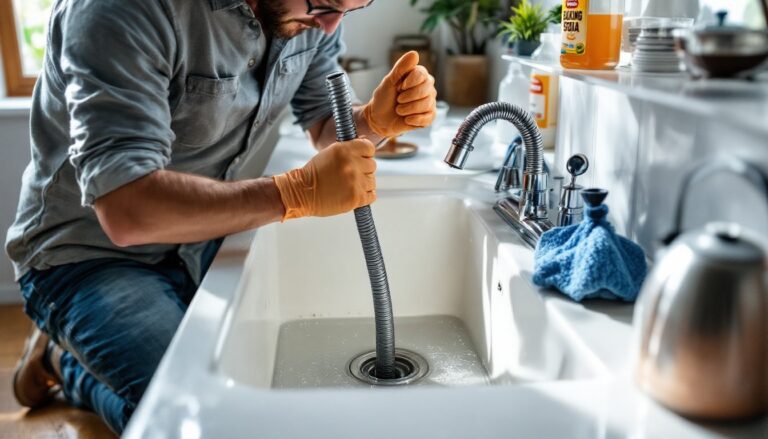
For clogs deeper in the line, a hand-crank drain auger (also called a plumber’s snake) is the next step. They cost $25–$60 and work well on hair and grease. Feed the snake into the drain, crank slowly, and pull back when you feel resistance. You’ll either dislodge the clog or hook the debris so you can yank it out.
Enzymatic drain cleaners:
These use natural bacteria or enzymes to break down organic buildup, they’re slower than chemical cleaners but safer for your pipes and septic systems. Pour the product down the drain, let it sit overnight, and flush with hot water. Results take 8–12 hours, so plan ahead. Brands like Green Gobbler or Earthworm work reasonably well for maintenance and light buildup.
Baking soda and vinegar:
Not as powerful as commercial options, but safe and cheap: pour 1/2 cup of baking soda down the drain, chase it with 1 cup of white vinegar, cover the drain, and let it sit for 30 minutes. Flush with boiling water. This handles minor slow drains and odors but won’t clear severe clogs.
The wet/dry vacuum method:
If you own a shop vac, set it to wet mode, seal the drain opening, and let suction pull out the clog. This works surprisingly well for toilet clogs and shallow blockages.
If none of these steps work after 2–3 attempts, it’s time to call a professional. Continuing to force it risks damaging your pipes or pushing the blockage deeper into your lateral line.
When to Call a Professional Drain Cleaner
Know your limits. Some situations demand licensed plumbers with camera equipment and motorized drain machines.
Call a pro if:
- Multiple drains in your home are slow or backing up (sign of a main line clog or septic issue).
- You suspect root intrusion (tree roots visible in yard, wet patches, sewage smell during rain).
- Sewage or murky water is backing up into showers, tubs, or basements.
- You’ve snaked or plunged multiple times with no lasting improvement.
- The clog is deeper than 15–20 feet from the access point.
- You hear persistent gurgling from toilets or drains (often indicates a main line issue).
A professional will use CCTV camera inspection to see exactly what’s blocking the line. This costs $200–$400 but saves money by ruling out expensive trenchless repairs if the problem is just a simple clog. Motor-driven drain cleaning machines ($300–$800) and hydrojetting ($400–$600) are effective for stubborn buildup and root-choked lines but require training and specialized equipment.
Atlanta homeowners should get estimates from at least two contractors. Comparing quotes through services like HomeAdvisor helps you understand fair pricing in your neighborhood and find licensed professionals with good reviews. Emergency drain service (nights, weekends) typically costs 50–100% more than daytime calls, so plan ahead when possible.
Preventative Drain Care Tips for Atlanta Homes
An ounce of prevention is worth a pound of expensive plumbing repairs.
Monthly habits:
- Run hot water down drains weekly to flush light buildup.
- Use drain screens or hair catchers in showers and sinks, they’re $3–$8 and eliminate 80% of hair-related clogs.
- Never pour grease, oil, or food scraps down the kitchen sink. Let grease cool, wipe it into the trash, and rinse with cold water first.
- Avoid “flushable” wipes, dental floss, and feminine hygiene products: they don’t break down and tangle in pipes.
Quarterly or seasonal maintenance:
- Run an enzymatic drain cleaner through all drains once per quarter to keep pipes clean.
- After heavy rain, check for soggy patches or odors in your yard, early signs of sewer line trouble.
- In spring and late summer (peak root-growing seasons), consider applying a root-inhibiting chemical to slow intrusion.
Professional check-ups:
If your home is over 20 years old, or you’ve had drain issues before, schedule a professional CCTV inspection every 2–3 years. Finding cracks, joint separation, or early-stage root intrusion before they become blockages keeps emergency calls and bill shock at bay. Family Handyman and local plumbing forums often have useful tips on seasonal maintenance specific to Georgia climate zones.
Keep records of any drain work you’ve done, it helps the next contractor diagnose problems faster and shows potential home buyers that you’ve maintained the plumbing.