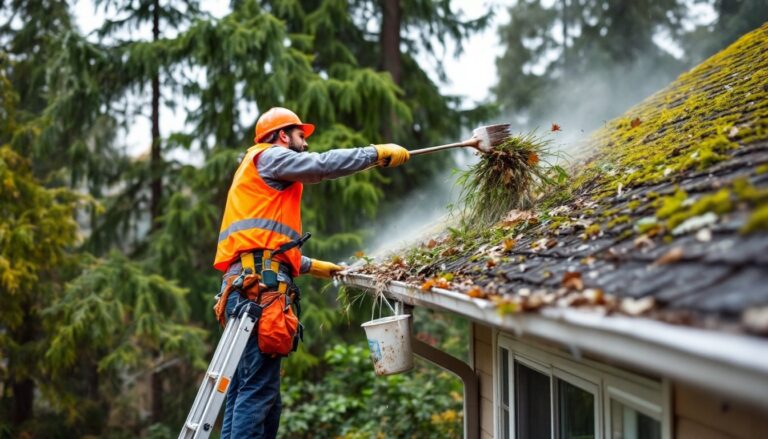
Clogged gutters are one of those maintenance jobs homeowners put off until water starts pooling in the wrong places. But regular gutter cleaning doesn’t just prevent headaches, it protects your foundation, roof, and fascia from costly water damage. A better gutter cleaning approach starts with understanding why it matters, having the right tools at hand, and knowing when to call in a professional. Whether you’re tackling this for the first time or refining your process, this guide walks you through the smart way to clean gutters safely and effectively.
Table of Contents
ToggleKey Takeaways
- Regular gutter cleaning twice a year prevents costly water damage to your foundation, roof, and fascia by keeping water flowing toward downspouts instead of pooling and backing up.
- A better gutter cleaning approach requires proper safety equipment—including a sturdy ladder, work gloves, safety glasses, and a helper—to prevent falls and injuries.
- Always clean gutters by working away from the downspout and flushing with standard water pressure to remove silt and sediment, then inspect the downspout itself to avoid clogged blockages that undo your effort.
- Trim overhanging tree branches and consider installing gutter guards to reduce debris volume and extend the time between cleanings, though these upgrades don’t eliminate maintenance entirely.
- For two-story homes, complex roof lines, or damaged gutters showing rust or separated seams, hiring a professional ($150–$300 for single-story homes) is worth the investment for safety and proper repairs.
Why Regular Gutter Cleaning Matters More Than You Think
Gutters sit at the boundary between your roof and the rest of your home’s structure, and they’re doing heavy lifting every time it rains. When leaves, dirt, and debris clog them, water backs up and pools instead of flowing to the downspout. That standing water becomes heavy, a gutter full of wet leaves can weigh 50+ pounds per linear foot, and that weight stresses the fasteners holding gutters to the fascia board.
Over time, the water overflows and runs down your exterior walls, seeping into the foundation and causing damage that costs thousands to repair. It also promotes rot in the wood fascia and soffit, and can even damage your roof’s underlayment if the backup reaches that high. Beyond structural damage, standing water attracts mosquitoes and becomes a breeding ground for mold.
Most roofing and foundation experts recommend cleaning gutters at least twice a year, spring and fall, or more often if you have large trees overhead. That’s not overkill: it’s preventative maintenance that extends the life of your roof, protects your foundation, and saves you money.
Essential Tools and Safety Gear You’ll Need
Before you set foot on a ladder, gather the right equipment. Skipping or improvising on safety gear is how most gutter accidents happen.
Safety gear (non-negotiable):
• Sturdy extension ladder (typically 20–28 feet for single-story homes: check the duty rating)
• Work gloves (leather or heavy-duty nitrile: wet debris is slippery and gritty)
• Safety glasses or face shield
• Closed-toe shoes with good grip
• A buddy or someone to stabilize your ladder (not optional for heights above 10 feet)
Cleaning tools:
• Gutter scoop or spoon (curved to match gutter profile: a stiff plastic kitchen spatula works in a pinch, but a real scoop is faster)
• Bucket or mesh bag clipped to the ladder to catch debris as you go
• Garden hose with a pistol-grip nozzle for flushing (check water pressure, high-pressure washers can damage gutters)
• Wet/dry shop vac (optional but speeds up the job, especially if you have lots of silt)
Nice-to-have extras:
• Gutter guards or screens (if considering upgrades for next time)
• Drop cloth to protect landscape beds and hardscape below
Step-by-Step Guide to Cleaning Your Gutters Safely
-
Set up safely. Position your ladder so you can reach the gutter comfortably without overreaching. The base should be about 3 feet away from the wall for every 4 feet of ladder height (that 3-to-4 ratio keeps it stable). Have a helper hold the base or use ladder feet with anti-slip pads on hard surfaces. Wear your gloves and glasses before climbing.
-
Remove the big debris first. Use the gutter scoop to pull out leaves, twigs, and larger clumps of silt. Work from the downspout area backward toward the high point of the gutter run, dropping debris into your bucket. This prevents you from pushing blockages toward the downspout as you work.
-
Check the downspout. Disconnect the downspout elbow (if it’s removable) and look down inside. If water doesn’t flow freely, use a plumbing snake or flush from the top with the hose using a pistol grip to avoid damage. A clogged downspout will make your work upstream useless.
-
Flush with water. Once large debris is out, use the hose to flush the gutter toward the downspout. This removes silt and sediment and lets you spot any low spots where water pools. Standard water pressure is fine: don’t use a pressure washer, which can dent or separate aluminum gutters and lift shingles.
-
Inspect as you go. Look for cracks, separated seams, missing fasteners, or standing water. Mark any problem areas with a piece of tape so you can address them later.
-
Reinstall and test. Once clean, secure the downspout back and run the hose one more time to confirm water flows freely to the ground.
Common Mistakes Homeowners Make (And How to Avoid Them)
Not cleaning toward the downspout. This is the biggest mistake, starting near the downspout and working backward pushes debris into it, creating a clog that defeats the whole effort. Always work away from the downspout.
Ignoring the downspout itself. Your gutters can be spotless, but if the downspout is blocked, water backs up anyway. Disconnect it, look inside, and clear any blockages before you finish.
Rushing and skipping the hose flush. Leaves and silt look removed, but fine sediment remains. A proper flush at the end ensures everything flows and lets you spot slow-draining sections.
Using too much ladder height or reaching too far. The temptation to stay on the ladder longer stretches your reach and destabilizes the ladder. Move it frequently, taking an extra 30 seconds to reposition is worth avoiding a fall.
Cleaning in heavy rain or just after rain. Wet debris is heavier and slips through your grip more easily. Timing matters: aim for a dry day when the debris has dried out a bit.
Not wearing proper PPE. Gutters harbor bird droppings, mold, wasps nests, and sharp metal edges. Gloves and glasses aren’t optional: they’re your first line of defense against cuts, infections, and eye injury.
When to Call the Professionals
Some jobs are simpler than others. If your home is a single story, gutters are in good condition, and you’re comfortable on a ladder, this is a solid DIY task. But there are legitimate reasons to hire a professional.
Call a pro if:
• Your home is two stories or higher and you lack a tall ladder or experience working at height. Falls from ladders are among the most common home injuries.
• Gutters show signs of damage: rust, deep cracks, separated seams, or missing sections. These need replacement or repair, not just cleaning.
• You discover nests, hornet nests, or animal activity in the gutters. Removing those safely sometimes requires a licensed pest control operator.
• You have hip or complex roof lines where cleaning is awkward and dangerous.
• You have gutter guards already installed that require specialized removal or professional maintenance.
A professional cleaning typically costs $150–$300 for a single-story home (varies by region and gutter length). That’s worth it if safety is a concern. Resources like Today’s Homeowner and Family Handyman have contractor-finder tools and seasonal repair guides to help you vet local services.
Preventative Maintenance Tips for Year-Round Protection
Cleaning twice a year is the baseline, but smart maintenance keeps gutters working longer.
Trim tree branches overhanging your roof. This is the single best long-term fix, fewer leaves overhead means less debris in the gutters. If branches are large, hire a certified arborist: improper cuts weaken trees and can damage your roof.
Consider gutter guards or screens. Mesh screens block leaves while allowing water through. They don’t eliminate cleaning entirely (silt and small debris still accumulate), but they reduce frequency and the debris volume. Quality screens cost $3–$8 per linear foot installed: cheap ones clog quickly. Bob Vila’s guides cover different gutter guard systems and when they’re worth the investment.
Check fasteners after heavy rain. Gutters move slightly when full of water. After a downpour, look for gaps between the gutter and fascia that suggest fasteners have loosened. Tighten bolts or replace fasteners before they fail entirely.
Inspect downspout extensions. The downspout should direct water at least 4–6 feet away from the foundation. If an extension is loose, cracked, or missing, reattach or replace it. Water running along the foundation is one of the biggest causes of basement seepage.
Plan a spring and fall schedule. Mark your calendar for mid-April and mid-October. Spring cleans up winter’s fallout: fall cleans before leaves really start dropping. Consistency beats crisis management every time.
Conclusion
Gutter cleaning isn’t glamorous, but it’s one of the most cost-effective maintenance tasks a homeowner can tackle. A couple of hours twice a year, plus proper equipment and caution, keeps water flowing where it should go and protects the investments you’ve made in your home. Know your limits: if you’re uncomfortable on a ladder or your home is tall, hiring a professional is the smart move. Either way, consistency and attention to what you find during cleaning will catch small problems before they become expensive repairs.