A slow drain feels like a minor annoyance until it becomes a backed-up mess. The good news? Most drain and sewer issues start small, and catching them early saves time, money, and frustration. Whether you’re dealing with a sluggish bathroom sink or a sluggish main line, knowing the difference between a DIY fix and a job for the pros is crucial. This guide walks you through identifying drain problems, tackling what you can handle yourself, and knowing exactly when to call in reinforcement. Your home’s plumbing system works overtime, let’s keep it flowing.
Table of Contents
ToggleKey Takeaways
- Slow drainage, gurgling sounds, and multiple fixtures backing up are warning signs that drain and sewer cleaning may be needed before minor issues become costly repairs.
- DIY methods like plunger technique, baking soda and vinegar, and hand augers solve 80% of household clogs without professional help.
- Main line clogs involving multiple fixtures, sewer odors inside the house, and wet yard patches require professional drain and sewer cleaning to avoid structural damage.
- Prevent future drain issues by using drain screens, avoiding grease and non-flushable items, and scheduling professional camera inspections every 5–10 years.
- Know your limits: persistent clogs after two DIY attempts or signs of a failing sewer line should prompt a call to a licensed plumber with proper licensing and references.
Signs Your Drains Need Cleaning
Before you reach for the plunger, learn to read your home’s warning signs. Slow drainage is the obvious red flag, water lingering in your sink, shower, or tub longer than usual signals a partial blockage. Listen for gurgling sounds coming from drains or toilets: that’s air trapped behind a clog trying to escape.
Multiple fixtures backing up simultaneously is a bigger deal than a single sluggish drain. If your toilet gurgles when you run the washing machine, or the shower drains when the kitchen sink gurgles, you’re likely dealing with a main line clog rather than a local blockage. This distinction matters because it determines whether you’re using a plunger or calling a licensed plumber.
Odors near drains or coming from cleanouts (those caps in your yard or basement) indicate decomposing material, hair, grease, soap buildup, or worse. Visible wet patches in your yard, especially near the sewer line, suggest a more serious issue requiring immediate professional attention.
Fountain water pooling in your basement near the main drain or foundation cracks point to a failing sewer line. These aren’t cosmetic problems: they’re structural concerns that demand professional diagnosis and permits in most jurisdictions.
DIY Drain Cleaning Methods That Work
Before calling a plumber, try these methods for minor clogs, they’re often effective and cost almost nothing.
Using a Plunger Effectively
Most homeowners plunge wrong, flailing away like they’re trying to drown the drain. A proper plunge requires technique. Fill the sink or tub with a few inches of water to create a seal around the plunger cup. For a cup plunger (flat-bottomed, used on sinks), position it directly over the drain and pump vigorously 15–20 times in rapid succession, then yank it away quickly to break the seal. The pressure differential is what dislodges the clog, not brute force.
For a flange plunger (the kind with a fold-down rubber lip for toilets), ensure you’re using it on the toilet and creating a proper seal over the bowl’s exit. A few seconds of vigorous pumping often breaks up toilet paper jams.
If you have a two-sink vanity, plug the overflow hole on one sink or cover the second drain with a wet cloth to prevent pressure from venting sideways. Without a seal, your plunging effort goes to waste.
Alternatively, a plunger pump (a handheld tool that compresses air without water) works on dry drains and requires no standing water. They’re cheap and surprisingly effective for tough clogs.
Natural Solutions: Baking Soda and Vinegar
This old remedy works better than you’d think, not because of chemical reactions, but because of physical agitation and mild corrosion. Pour about ½ cup of baking soda directly down the drain, followed immediately by 1 cup of white vinegar. The fizzing action helps break up hair and light soap buildup. Let it sit for 30 minutes to an hour, then flush with boiling water.
For stubborn hair clogs, remove the drain stopper first and pull out any visible hair with needle-nose pliers or a small wire hook. You’d be shocked how much hair accumulates just below the surface. This alone solves many shower drain problems.
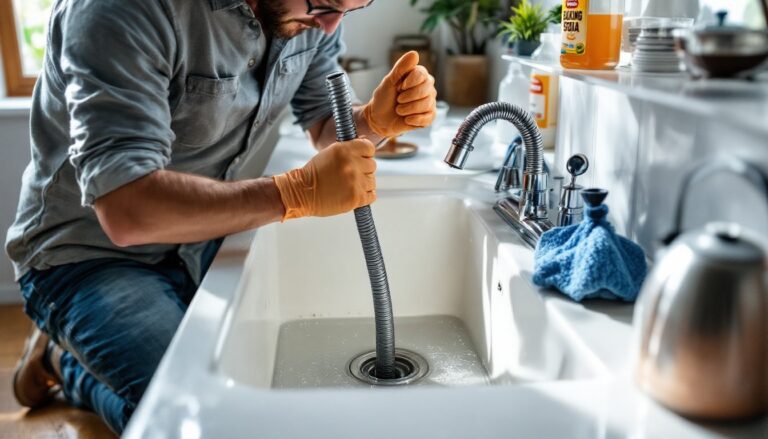
A drain snake (also called a hand auger) is your next step if plunging fails. A 25-foot unit costs $15–$30 and works on most kitchen and bathroom drains. Feed it down the drain slowly, twisting and pushing until you hit resistance. The corkscrew tip grabs hair and debris. Retract slowly, pulling the clog toward you. This is messy, wear gloves and have a bucket ready.
For tougher clogs, a wet/dry vacuum can be rented from most home improvement centers. These machines create intense suction that dislodges stubborn blockages. Duct tape an adapter to the hose, press it firmly over the drain, and turn it on. It’s loud and aggressive, but it works when other methods fail.
When to Call a Professional Plumber
Know your limits before you make the problem worse and costlier.
Stop DIY attempts if you suspect a main line clog (multiple fixtures backing up). You’ll need a professional-grade drain cleaner or camera inspection. Main lines handle drainage from your entire home and, when blocked, require permits in most jurisdictions to repair. Misdiagnosis or DIY attempts can damage the line or nearby utilities.
Sewer odors coming from inside the house, wet spots appearing in your yard, or foundation cracks alongside drainage problems signal a failing sewer line. This absolutely requires a professional. Most sewer line work is structural and requires excavation, permits, and sometimes replacement of the entire line, costs typically range from $3,000 to $25,000 depending on damage, depth, and your location. When evaluating contractors, hiring a qualified sewer cleaning professional involves checking licensing, insurance, and asking for references.
If a clog persists after two solid attempts with a plunger and hand auger, call a plumber. They’ll bring a motorized auger or hydro-jetting equipment that you don’t have and shouldn’t rent without training. Resources like HomeAdvisor and ImproveNet connect you with vetted contractors and provide cost estimates so you’re not blindsided.
Blocked or cracked clay sewer lines (common in older homes) often require professional hydro-jetting to clear roots and scale, followed by camera inspection to check for structural damage. This isn’t a weekend project.
Preventing Future Drain and Sewer Issues
Maintenance beats emergency repairs every time.
Use drain screens or strainers in every sink, shower, and tub. A $2 plastic basket catches hair and debris before they enter the pipe. Empty it weekly, it takes five seconds and prevents most clogs.
Never pour grease down the kitchen drain. Let it cool, harden, and throw it in the trash. Grease solidifies inside cold pipes and accumulates over months, eventually blocking the line entirely. This is the single biggest cause of kitchen drain clogs.
Limit what goes down the toilet to toilet paper and human waste. “Flushable” wipes, cotton swabs, feminine hygiene products, and pet litter cause main line clogs. Toilet paper is engineered to break down: everything else isn’t.
Run hot water down drains weekly, especially kitchen sinks. Heat helps dissolve soap residue and keeps pipes clear. A monthly dose of baking soda followed by hot water (skip the vinegar routine if there’s no obvious clog, you’re just maintaining) keeps things flowing smoothly.
If you have trees near your sewer line, consider a root barrier or preventive treatments. Roots follow moisture and can infiltrate clay pipes. Ask your plumber to inspect for root intrusion if you’re in an older home with original clay lines, this prevents catastrophic failures.
Have your main sewer line inspected by a professional with a camera every 5–10 years, especially in homes over 30 years old. The $300–$400 investment reveals problems before they become emergencies.
Conclusion
Most drain clogs are preventable with simple habits and caught early with quick action. A plunger and a hand auger solve 80% of household clogs without professional help. But knowing when to stop, when a clog signals a deeper structural problem, saves thousands in damaged pipes and unnecessary repairs. Your drains are working right now without you thinking about them. Keep it that way with basic maintenance and honest assessment of what you can tackle versus what requires licensed expertise.