A clogged drain at 11 p.m. on a Sunday is nobody’s idea of fun. Water backs up in your sink, shower, or toilet, and suddenly you’re wondering whether to call an emergency plumber (and pay weekend rates) or grab a plunger and hope for the best. The good news: not every drain emergency requires a professional visit. But knowing which problems you can handle yourself and when to call in backup is crucial. This guide walks you through quick DIY methods, signs that professional help is necessary, and smart prevention strategies to keep your drains flowing and your wallet intact.
Table of Contents
ToggleKey Takeaways
- Emergency drain cleaning often doesn’t require a professional visit—use a plunger or drain snake first for isolated single-fixture clogs with slow drainage and no foul odor.
- Call a licensed plumber immediately if multiple fixtures back up simultaneously, sewage appears, or you detect sewer odors, as these indicate serious main line issues requiring professional expertise.
- Master the plunger technique by filling the fixture with water, sealing overflow holes, and pumping vigorously 15–20 times; for drain snakes, feed the cable slowly and crank when you hit resistance.
- Professional emergency drain services use video camera inspections and hydro-jetting (up to 4,000 PSI) to diagnose and thoroughly clear clogs that DIY methods can’t handle.
- Prevent future drain emergencies by installing drain screens, never pouring grease down drains, avoiding flushing non-toilet-paper items, and scheduling professional inspections every 3–5 years for older homes.
- Emergency service rates run 1.5 to 3 times higher than daytime appointments, but professional help prevents costly water damage, mold growth, and sewer line replacement.
When You Need Emergency Drain Service
Not all drain clogs are created equal. A slow-draining bathroom sink from hair and soap buildup is different from raw sewage backing into your basement, and knowing the difference saves time and money.
You can usually handle it yourself if the clog is isolated to a single fixture (one bathroom sink, one shower), the water drains slowly but doesn’t back up, and there’s no foul odor beyond typical drain funk. These are surface-level blockages, usually caused by hair, soap scum, or food debris, and they respond well to basic tools.
You need professional help immediately if multiple fixtures are backing up at the same time (water pools in the shower while the toilet gurgles), sewage or dark water is coming up through drains, you smell rotten eggs or a strong sewer odor, or the main cleanout access shows standing water. These are signs of a clog deeper in your line or a serious issue like a broken pipe or collapsed section. Calling a licensed plumber now prevents a messy and expensive situation later.
Also consider your own skill level and available tools. If you’ve never used a drain auger or you’re unsure whether you have the right equipment, reaching out to a pro beats spending hours frustrated in your basement. Some municipalities require permits for certain plumbing work, so check your local codes before you start.
Quick DIY Methods To Try First
The Plunger Technique
The plunger is your first line of defense because it’s cheap, quick, and often effective. For best results, fill the sink or tub with a few inches of water, enough to cover the cup entirely. Make sure the overflow hole (if your sink has one) is blocked: use a wet rag to seal it. Position the plunger cup directly over the drain and pump vigorously 15 to 20 times, maintaining a tight seal. On the final push, yank the plunger up sharply to break the clog.
The hydraulic pressure from this action dislodges most hair and soap clogs. If water drains after the first attempt, great, you’re done. If not, try a second or third round. For toilets, use a flange plunger (the one with the extended cup), not a flat-bottomed cup plunger, since the shape matters for creating proper pressure.
Wear nitrile gloves and have a towel nearby because splashing is inevitable. Don’t use boiling water in a porcelain toilet: the thermal shock can crack it.
Drain Snake and Auger Solutions
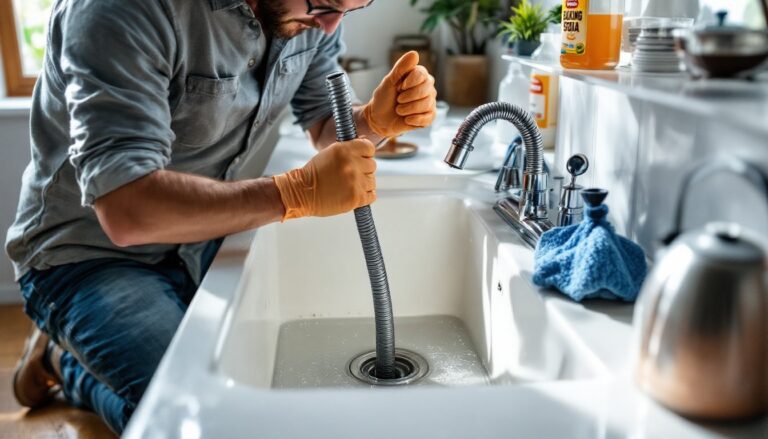
If the plunger didn’t work, a drain snake (also called a hand auger) is your next tool. These are affordable, $15 to $30 for a manual version at any hardware store. Insert the flexible cable into the drain and crank the handle, which rotates the cable and breaks apart the clog or catches hair for removal.
For tougher blockages, an electric drain auger ($40 to $100 to buy, or rent for $20 to $30 per day) provides more power. These are louder and require more care, but they cut through soap scum and grease faster than manual snakes.
Important safety tip: Turn off the power before disassembling anything, and wear safety goggles and work gloves to protect yourself from splashing and sharp edges.
Before inserting the snake, remove the drain stopper or pop-up assembly. Feed the cable slowly into the drain and stop when you feel resistance. Once you hit the clog, crank or activate the auger several times. You’ll know it’s working when water starts draining or you pull up a clump of hair and debris. Flush with hot water to clear remaining particles.
Don’t force the cable if it hits hard resistance, you might damage the pipe. If the snake reaches the main line and gets truly stuck, that’s a sign you need professional help.
Professional Emergency Drain Services
When DIY methods fail, or if you suspect a deeper issue, hiring a licensed plumber is the smart move. A professional arrives with diagnostic equipment like video camera inspections, which reveal exactly where and why your drain is clogged. This clarity prevents guessing games and repeated failed attempts.
Professionals use high-powered hydro-jetting, pressurized water (up to 4,000 PSI) that blasts through clogs and cleanses the entire interior of your pipe. This is far more thorough than a snake and leaves your lines as clean as possible. They can also handle tree root intrusion, collapsed pipes, or misaligned sections that require repair, not just cleaning.
Yes, emergency service calls cost more than daytime appointments, expect 1.5 to 3 times the standard rate for nights, weekends, or holidays. But compare that cost to water damage in your home, mold growth, or a full sewer line replacement if you ignore a serious problem. Platforms like Angi and HomeAdvisor let you request quotes from vetted plumbers and read customer reviews before hiring.
When you call, describe your situation clearly: Is it one drain or multiple? Is there backflow? Any odors? This helps the plumber prepare the right equipment and give a more accurate time estimate.
Prevention Tips To Avoid Future Emergencies
An ounce of prevention beats an emergency call and a hefty bill. Start with the simplest habit: use drain screens in your showers and sink drains. These cost a dollar or two and catch hair before it goes down the line.
Never pour grease, fats, or oils down the drain, they solidify as they cool and bind with other debris, creating stubborn clogs. Wipe pots and pans with a paper towel first, then wash them. Similarly, avoid flushing anything but toilet paper and human waste. “Flushable” wipes, feminine hygiene products, and cotton balls are common culprits in clogged lines, even if packaging claims otherwise.
Use a drain strainer plug during dishes, and rinse food debris into the trash, not the sink. Every month or two, pour boiling water down healthy drains to clear minor buildup. For kitchen sinks that handle a lot of cooking, flush with hot water after washing greasy dishes, this prevents grease from settling.
If you have trees near your sewer line, consider a root barrier or periodic professional root removal. Roots seek moisture and can crack pipes or weave through them, especially in older clay or concrete lines. Schedule a professional camera inspection every 3 to 5 years if you have an older home (1950s or earlier) or notice recurring slow drains.
Clear your gutters and yard drains too, standing water and debris can lead to foundation drainage problems, which eventually affect interior plumbing. Regular maintenance and small fixes now prevent disasters later.
For detailed DIY repair guidance, Family Handyman offers step-by-step plumbing tutorials if you want to deepen your skills.
Conclusion
Emergency drain clogs are stressful, but they’re often fixable with a plunger or auger if you act quickly. Know when a problem is within your reach and when it’s time to call a professional, this judgment call saves frustration and money. Keep drain screens, avoid pouring grease, and stick to preventive flushing habits, and you’ll stay ahead of most clogs. When disaster strikes anyway, you’ll know exactly what to do.