A clogged shower drain is one of those problems that seems small until water starts pooling around your feet mid-shower. Most homeowners don’t realize that clearing a drain doesn’t always require calling a plumber or dumping caustic chemicals down the pipe. In fact, you’ve probably got most of what you need to fix it yourself sitting under your bathroom sink. This guide walks you through five practical methods, from the gentlest natural approach to heavier-duty options, so you can pick the right tool for your situation and get water flowing again.
Table of Contents
ToggleKey Takeaways
- Start with the baking soda and vinegar method for shower drain cleaning—it’s safe, non-toxic, and often clears slow drains and minor buildup without tools or expense.
- A plumbing snake or hand auger is the most reliable DIY option for stubborn clogs, costing $15–30 and effectively removing hair and debris from within the first 12 inches of your drain.
- Reserve chemical drain cleaners as a last resort only; they’re caustic, dangerous to handle, and can damage old pipes or septic systems if not used with extreme caution.
- Install a drain strainer for $5–15 to prevent 80% of future clogs, and flush your shower drain weekly with hot water to dissolve soap buildup before it becomes a problem.
- Call a licensed plumber if your shower drain clog is deeper in the system, your pipes are older than 1970, or you notice water pooling in multiple drains—these signs indicate issues beyond basic drain cleaning solutions.
Why Your Shower Drain Gets Clogged
Shower drains clog for a few predictable reasons: hair, soap residue, and mineral buildup are the usual culprits. Hair wraps around the drain flange and creates a net that catches everything else. Soap scum mixes with hard water minerals and sticks to the pipe walls, narrowing the opening. Over time, this gunk hardens and restricts water flow.
Most clogs form within the first 12 inches of the drain, right under the shower floor. That’s good news for DIYers, because it means you don’t need to snake halfway through your house. Understanding what you’re dealing with helps you pick the right method. A slow drain caused by soap scum might respond to hot water and vinegar, while a hair-clogged drain needs mechanical removal.
The Baking Soda And Vinegar Method
This is the gentlest approach and works surprisingly well on slow drains and minor buildup. You’ll need baking soda, white vinegar, and a kettle of hot water, no special tools required.
Here’s how to do it:
- Remove any visible debris from the drain opening (hair, soap scum). Use a cloth or old toothbrush to pull out loose material.
- Pour one cup of baking soda directly into the drain.
- Follow it with one cup of white vinegar. You’ll see fizzing immediately, that’s the reaction breaking down deposits.
- Plug the drain with a wet cloth or stopper for 15 minutes. This keeps the action directed downward into the pipe.
- Boil a kettle of water and pour it slowly down the drain to flush out loosened debris.
- Run hot water for 30 seconds to clear the line.
This method is safe, non-toxic, and won’t damage old pipes. If your drain is only moderately sluggish, this might be all you need. For stubborn clogs, move on to the next method.
Using A Plumbing Snake Or Drain Auger
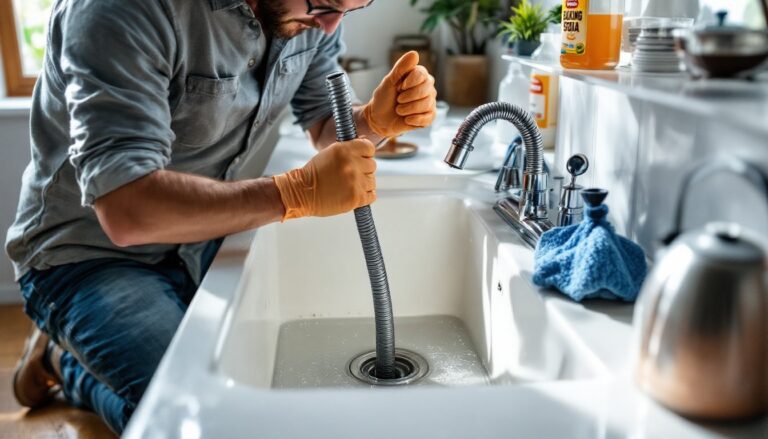
When natural methods don’t work, a plumbing snake (also called a hand auger or sewer auger) is the most reliable DIY tool. These come in two versions: a basic 25-foot manual auger (around $15–30) or a powered drain auger (around $40–100). For a typical shower drain, a manual snake works fine.
What you’ll need:
- Plumbing snake or hand auger
- Work gloves
- Towels or a bucket to catch water
- Needle-nose pliers (optional, for handling the stopper)
Here’s the process:
- Remove or push down the drain stopper to access the opening. If it’s stuck, pull it straight up or unscrew it, depending on the type.
- Feed the auger wire slowly into the drain, turning the handle clockwise as you push. Don’t force it, the wire will find its way.
- When you feel resistance, keep turning. The wire will either hook onto hair and pull it out, or break through the clog.
- Once the clog breaks, continue rotating for a few more turns to ensure you’ve cleared it.
- Withdraw the auger slowly and carefully. Use a towel to catch any water and debris.
- Flush with hot water to clear remaining material.
A powered auger does the same job faster, but it has more kick and can damage older pipes if you’re not careful. Stick with a manual snake if your home was built before 1980. Family Handyman provides a using basic tools you probably already own.
Chemical Drain Cleaners: When To Use Them
Chemical drain cleaners (sodium hydroxide or sulfuric acid) are strong and fast, but they come with real risks. They generate heat, can splatter, and damage old pipes or septic systems. Use them only as a last resort when mechanical methods haven’t worked and before calling a plumber.
Safety first:
- Wear chemical-resistant gloves, eye protection, and a long-sleeved shirt. These cleaners burn skin and blind eyes instantly.
- Ensure your bathroom is well-ventilated. Open windows and use exhaust fans to disperse fumes.
- Never mix chemical cleaners with other products, especially ammonia-based cleaners (this creates toxic chlorine gas).
- Don’t use chemical cleaners if you have PVC pipes in older systems: the caustic action can weaken them over time.
If you decide to use one:
- Clear standing water from the drain with a cup or wet vacuum. Cleaners work better on dry surfaces.
- Read the label carefully and follow dosage instructions to the letter.
- Pour the cleaner slowly into the drain and step back immediately.
- Wait the recommended time (usually 15–30 minutes). Don’t look into the drain or run water.
- Flush with cold water only (hot water intensifies the chemical reaction). Use a large volume of water.
Proper drain cleaning techniques balance safety with effectiveness. Many professionals recommend enzymatic drain cleaners as a safer middle ground, they’re slower than chemical cleaners but gentler than caustic products.
Prevention Tips To Keep Your Drain Clear
The best drain is one that never clogs. Prevention costs almost nothing and saves you time and frustration down the road.
Simple habits that work:
- Install a drain strainer or hair catcher: A simple mesh or silicone insert catches hair before it enters the pipe. These cost $5–15 and catch 80% of future clogs.
- Flush weekly with hot water: Run a kettle of near-boiling water down the drain every week to dissolve soap buildup. This takes two minutes and prevents slow drains from becoming clogs.
- Use the baking soda and vinegar method monthly: Keep the drain fresh without chemicals or tools. It’s maintenance, not crisis response.
- Wring out hair from the shower floor: Don’t let wet hair go down the drain. A squeegee or even your fingers after a shower prevents the biggest source of clogs.
- Limit soap buildup: Solid bar soap leaves more residue than liquid soap. If you prefer bars, occasional hot-water flushes help.
- Know your water hardness: Hard water deposits buildup faster. If you live in a high-mineral area, monthly baking soda treatments become more important.
These steps won’t cost you anything except a few minutes. Over a year, you’ll save the cost and hassle of clearing a major clog.
When To Call A Professional Plumber
Some situations are beyond DIY territory. Call a licensed plumber if:
- The clog is deeper in the system: If none of these methods work, the blockage may be in the branch line or main drain stack. A plumber has 50+ foot snakes, video inspection cameras, and the knowledge to avoid damaging your pipes.
- Your pipes are old or fragile: Homes built before 1970 often have cast iron or clay drains. Aggressive mechanical cleaning can crack these pipes, leading to much bigger, and costlier, problems.
- You see standing water in multiple drains: This signals a backup in the main line, not a shower drain clog. You’ll need a professional to clear the main stack and diagnose any damage.
- There’s a sewage smell or backup: This indicates a serious blockage or a damaged line. Don’t DIY this: it’s a health hazard and likely a permit-required repair.
- You’ve already tried everything listed here: If baking soda, a snake, and reasonable effort haven’t worked, professional equipment and expertise are your next move.
A plumber visit costs $150–300 for a service call plus clearing the clog, but it’s worth it if it saves your pipes from damage. The Spruce offers comprehensive guidance on home maintenance that includes knowing when to call professionals.
Conclusion
Clearing a clogged shower drain isn’t difficult if you start with the right method for the problem. Begin with baking soda and vinegar, it’s free, safe, and often works. Graduate to a plumbing snake if that doesn’t cut it. Reserve chemical cleaners for stubborn, last-resort situations, and know when a professional makes sense. Most importantly, prevent future clogs with a strainer and weekly hot-water flushes. You’ll rarely need to think about your shower drain again.