Gutter cleaning isn’t glamorous, but it’s essential. Clogged gutters lead to water damage, foundation problems, and costly repairs that’ll make you regret skipping maintenance. If you’re thinking about tackling gutter cleaning, whether DIY or hiring it out, pricing is a legitimate question. In 2026, gutter cleaning costs range widely depending on your home’s size, gutter condition, and whether you’re doing the work yourself. Understanding what affects the price per foot helps you budget accurately and avoid surprise contractor bills.
Table of Contents
ToggleKey Takeaways
- Professional gutter cleaning price per foot ranges from $0.75 to $2.50 in 2026, with most homeowners paying $200–$500 per cleaning depending on home size and regional labor rates.
- Linear footage is the primary cost driver; a typical single-story home (150–200 feet of gutters) costs $150–$450, while two-story homes often exceed $600 due to increased labor and safety equipment needs.
- Gutter condition, debris type, and surrounding vegetation significantly impact pricing—heavy debris loads and steep roofs can add $0.25–$0.75 per foot or more to the total cost.
- Scheduling in spring or early fall, bundling services like gutter guard installation, and getting multiple quotes can reduce costs by 10–20% compared to peak-season rates.
- DIY gutter cleaning costs only $40–$80 in supplies but requires 3–5 hours of ladder work per 150 feet; hire professionals if you’re over 65, have mobility concerns, or live in a multi-story home to avoid fall risks.
- Installing gutter guards at $5–$15 per linear foot can reduce professional cleaning frequency from twice yearly to once every 2–3 years, quickly offsetting the initial investment.
Average Gutter Cleaning Price Per Foot
Professional gutter cleaning typically runs between $0.75 and $2.50 per linear foot as of 2026, though regional variation is significant. A comprehensive guide covering national average gutter cleaning costs ranging from 0.95 to 2.25 per foot shows that pricing depends heavily on your location, local labor rates, and contractor overhead.
For a typical single-story home with 150–200 linear feet of gutters, you’re looking at a job cost between $150 and $450 for a standard cleaning. Two-story homes or properties with more complex rooflines can push costs higher, sometimes exceeding $600. Many contractors offer seasonal discounts (fall and early spring are peak gutter seasons) or package deals if you bundle gutter cleaning with pressure washing or downspout repairs.
Some companies charge flat rates instead of per-foot pricing, especially for smaller jobs. A flat rate might be $200–$350 for basic cleaning on a modest home, while larger properties trigger per-foot calculations. Always ask whether the quote includes downspout clearing, minor repairs, or just debris removal, the scope matters.
Factors That Affect Gutter Cleaning Costs
Gutter Length and Home Size
Linear footage is the primary cost driver. A 1,500-square-foot ranch house typically has 150–180 feet of guttering, while a 3,000-square-foot two-story home can have 250–350 feet. The difference directly translates to labor time. A contractor charging $1.50 per foot on a small home clears 150 feet in roughly 2–3 hours: the same rate on a larger home means 4–5 hours of ladder work, positioning, and disposal.
Story count affects access difficulty too. Single-story homes allow ground-level or short-ladder work, speeding the job. Two-story and three-story homes require longer ladders, scaffolding, or lift equipment, which increases labor costs and sometimes adds $0.25–$0.75 per foot to the total. Some contractors factor in roof pitch steepness as well, steeper roofs demand safer, slower work.
Gutter Condition and Debris Type
Clean gutters clogged with leaves and twigs take less time than gutters packed with years of decomposed debris, silt, or roof shingle granules. Heavy debris loads triple the manual labor required and may warrant a higher per-foot rate or a flat-rate premium. If gutters are rusted, sagging, or have standing water suggesting blockages deeper in the downspout system, expect additional diagnostic and repair time, sometimes an extra $50–$150 per problem area.
Aspen and pine trees create seasonal headaches: homes surrounded by conifers require more frequent cleaning and command higher prices in regions where gutters clog faster. Some contractors quote lower rates for spring cleaning (less debris buildup) and higher rates for fall cleanings after leaf drop.
Money-Saving Tips for Gutter Cleaning
Schedule in spring or early fall when contractor demand is moderate and you might negotiate discounts. Peak season (mid-fall and early spring) drives prices up 10–20%.
Get multiple quotes. Three bids from different contractors reveal market rates for your area. Home improvement cost estimators and contractor resources like ImproveNet can help you compare local pricing and read contractor reviews before committing.
Bundle services. Many gutter companies offer discounts if you add downspout cleaning, gutter guard installation, or roof debris removal to the same visit. One mobilization often costs less than separate trips.
Install gutter guards to reduce cleaning frequency. Guards run $5–$15 per linear foot installed but can cut professional cleaning from twice yearly to once every 2–3 years, offsetting the upfront cost quickly.
DIY if you’re physically comfortable. This is the biggest cost saver (see section below), though it demands proper safety setup and disposal planning.
Ask about senior discounts or loyalty programs. Some contractors offer 10–15% discounts for seniors or repeat customers on annual maintenance contracts.
DIY Gutter Cleaning vs. Professional Services
DIY costs: Supplies only, ladder stabilizer, scoop, work gloves, trash bags, and eye protection, total around $40–$80. Repeat the work yourself 1–2 times per year, and you’ve invested less in a season than one professional cleaning.
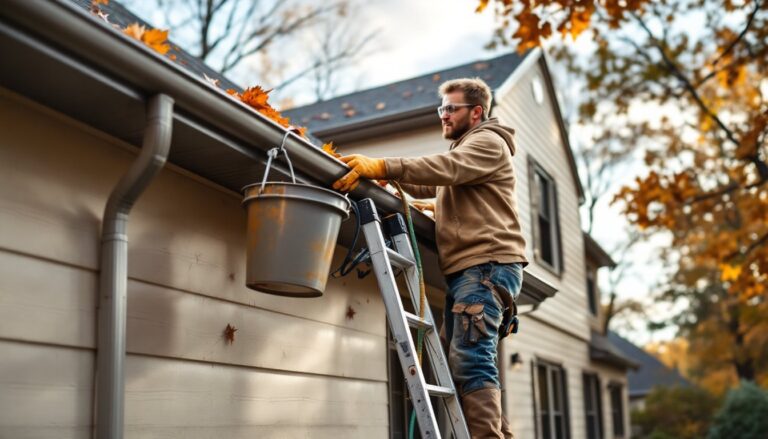
Trade-offs: DIY requires a sturdy 20–24 foot extension ladder, safe setup (level ground, someone spotting you), and 3–5 hours per 150 feet of gutter. You’ll dispose of debris yourself, bagging and hauling significant amounts takes time. The real risk is a fall: every year, thousands of homeowners injure themselves on ladders during gutter work. If you’re uncomfortable on ladders, have a steep roof, or lack someone to spot you, hire it out.
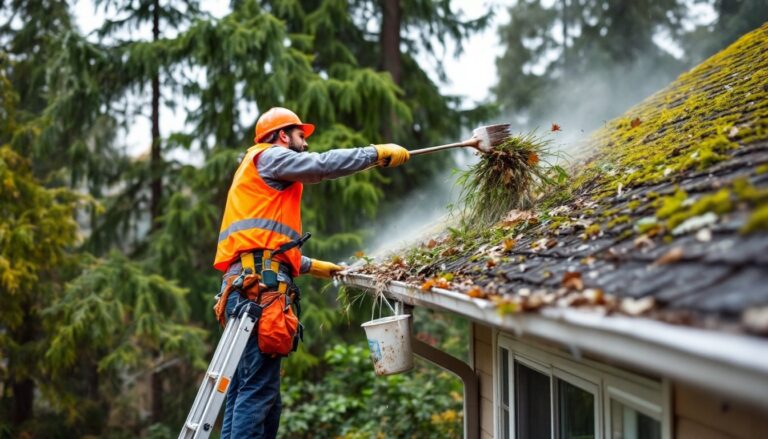
Professional safety advantage: Contractors carry liability insurance, use proper scaffolding or bucket trucks for two-story work, and work efficiently. A fall from your ladder is on you: a fall during a contractor’s work is insured and the contractor’s responsibility.
When to hire: If you’re over 65, have mobility issues, live in a three-story home, or simply value your time, professional cleaning costs $200–$500 per visit but eliminates risk and guarantees thorough work. Home improvement platforms like HomeAdvisor let you request quotes, check contractor credentials, and read reviews without leaving home.
Middle ground: Some homeowners DIY the first-floor gutters (easier, lower fall risk) and hire a professional for second-story sections. You’ll still save money while reducing personal risk.
Conclusion
Gutter cleaning costs range from under $0.75 per foot for basic work to $2.50 per foot for complex jobs or regional markets with high labor costs. Most homeowners pay $200–$500 per cleaning. The best approach depends on your home’s size, your physical ability, local contractor availability, and how much you value your time versus safety. Budget annually for maintenance, whether DIY or professional, and you’ll sidestep expensive water damage repairs.