Slow-draining sinks, backed-up showers, and gurgling toilets are part of homeownership in Denver. The city’s hard water, mineral buildup, and older plumbing infrastructure mean drain problems aren’t just a nuisance, they’re almost inevitable. The good news? Many common drain issues can be tackled before you call a plumber. This guide walks through identifying what’s clogging your drains, which DIY solutions actually work, and when professional help becomes the smarter choice. Whether you’re dealing with a minor slow drain or a stubborn clog, you’ll find practical, honest advice tailored to Denver homes.
Table of Contents
ToggleKey Takeaways
- Denver’s hard water and mineral buildup make drain cleaning more challenging than in other regions, but most common clogs can be resolved with plungers or hand snakes within the first 3 to 5 feet of the drain.
- Natural solutions like baking soda and vinegar or boiling water are safer and more effective for minor drain cleaning than chemical drain cleaners, which corrode older pipes.
- If DIY drain cleaning fails after multiple attempts or if multiple drains back up simultaneously, main-line issues require professional equipment like motorized snakes or hydro-jetting, typically costing $150 to $1,500 in Denver.
- Early warning signs like slow drainage, gurgling sounds, or sewer odors should prompt immediate action to prevent full blockages that damage property or affect neighbors on shared sewer lines.
- Tree roots, sewer backups during heavy rain, and corrosion in older cast-iron pipes are beyond DIY scope and necessitate professional diagnosis and repair to avoid health hazards.
Common Drain Problems in Denver Homes
Denver’s hard water and mineral-heavy supply create specific drainage challenges homeowners don’t face in softer-water regions. Calcium and magnesium deposits accumulate inside pipes over time, narrowing the flow and trapping hair, soap residue, and food particles more easily. Older homes, and Denver has plenty, often have cast-iron or galvanized steel drains that corrode from the inside, creating rough surfaces where clogs catch.
The most common culprits are kitchen sink clogs from grease and food, bathroom drain clogs from hair and soap buildup, and toilet blockages from paper or non-flushables. If you notice water backing up into multiple fixtures at once, the problem is likely in the main line or sewer connection, that’s beyond DIY scope and requires professional equipment to diagnose.
Pay attention to early warning signs: slow drainage, occasional gurgling, or a slight sewer smell near floor drains or cleanout access points. Addressing these early prevents a full blockage that can damage your property or affect your neighbors’ systems if you’re on a shared line.
DIY Drain Cleaning Methods That Work
Before reaching for chemical drain cleaners, which corrode older pipes and harm the environment, try mechanical and natural solutions. Most drain clogs sit within 3 to 5 feet of the drain opening, well within reach of a plunger or hand-operated drain snake.
Plunger Techniques and Best Practices
A proper plunger technique matters more than you’d think. Use a cup plunger (the flat-bottomed type) for sinks and tubs, not a flange plunger designed for toilets. Fill the sink with enough water to cover the plunger cup completely, then block the overflow hole (if there is one) with a wet cloth to create proper suction.
Place the plunger over the drain and pump vigorously 15 to 20 times without breaking the seal. You’re forcing water pressure down the pipe to dislodge the clog. After several rounds, lift the plunger and check if water drains. Repeat 2 to 3 times before giving up.
For tub drains, the process is similar, but you may need to remove the overflow plate first. For shower drains, remove the strainer and clean out visible hair buildup before plunging, this often solves the problem outright.
Natural Solutions Using Household Items
Baking soda and vinegar work as a mild but effective drain cleaner, especially for slow drains and minor buildup. Pour 1/2 cup of baking soda down the drain, followed by 1 cup of white vinegar. The chemical reaction (you’ll see fizzing) helps break apart light clogs. Cover the drain with a stopper for 15 to 30 minutes, then flush with hot water. Repeat once if needed.
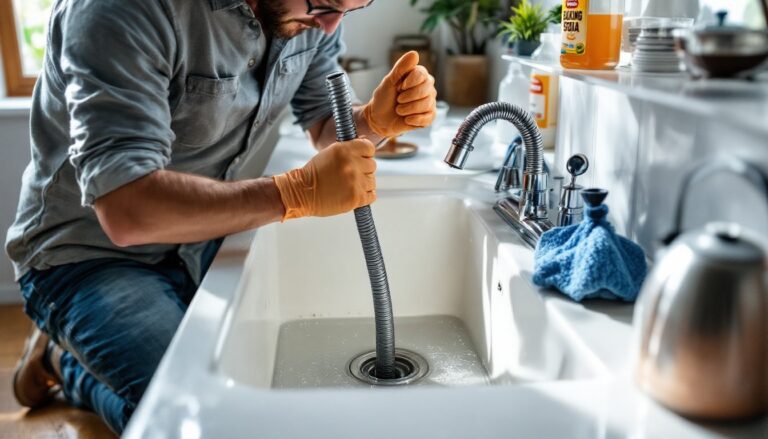
For tougher clogs, a hand-crank drain snake (also called a plumbing auger) costs $15 to $40 and works on most residential drains. Feed it into the drain slowly, turning the handle to break through the blockage. You’ll feel resistance when you hit the clog, keep turning and working the snake back and forth until the water starts flowing. Clean the snake thoroughly after use.
Boiling water works for grease clogs in kitchen pipes. Bring a kettle to a full rolling boil and slowly pour it down the drain in small amounts, giving each pour 30 seconds to work. The heat softens the grease so it flows through rather than accumulating. Don’t use this on PVC pipes, which can warp: older metal pipes handle it fine.
Wear gloves when handling drain debris, and avoid mixing baking soda/vinegar solutions with any commercial drain cleaner, the chemical reaction can produce toxic fumes.
When to Call a Professional Drain Service
If DIY methods fail after 2 to 3 attempts, the clog is deeper in the line or a symptom of a larger problem. Multiple drains backing up, water pooling in the yard, or persistent sewer odors all point to main-line issues that need a video inspection and professional-grade equipment like motorized drain snakes or hydro-jetting.
Denver’s sewer system is part of the metro combined sewer network, meaning heavy rain can back sewage into your home, a health hazard requiring immediate professional attention. Similarly, tree roots invading older clay or cast-iron pipes can’t be cleared with a plunger: a professional will use a root-cutting tool or recommend pipe repair or replacement.
Average drain cleaning costs in Denver range from $150 to $400 for a simple clog, depending on accessibility and severity. Main-line work or hydro-jetting can run $600 to $1,500. Resources like how much drain cleaning costs in Denver provide baseline pricing, though your actual cost depends on your plumber and the exact problem. Platforms like HomeAdvisor and ImproveNet help you find licensed plumbers, get estimates, and compare service reviews in your area.
If you rent, contact your landlord before attempting drain cleaning, they may be liable for the repair and have a preferred contractor. If you own your home and are unsure whether a problem is cosmetic or structural, a plumber’s initial diagnostic ($75 to $150) is money well spent and often credited toward repair costs.
Conclusion
Denver drain clogs are manageable with the right approach: plungers and hand snakes clear most blockages, natural solutions work for slow drains, and knowing when to call a professional prevents costly damage. Start simple, be honest about your limits, and don’t hesitate to bring in a licensed plumber for main-line work or persistent problems. Your drains will thank you.