Gutter cleaning isn’t glamorous, but it’s one of the most important maintenance tasks for Philadelphia homeowners. Every spring and fall, your gutters collect leaves, twigs, dirt, and debris that can clog downspouts, trap moisture, and eventually damage your fascia, soffit, and foundation. The humid Northeast climate makes this job even more critical, Philadelphia’s rain and seasonal leaf drop mean your gutters work overtime. Whether you’re tackling gutter cleaning in Philadelphia, PA yourself or considering when to hire help, understanding the process saves money and protects your home from costly water damage. This guide walks you through the why, what, and how of keeping your gutters flowing freely.
Table of Contents
ToggleKey Takeaways
- Gutter cleaning in Philadelphia, PA should be performed at least twice yearly in spring and fall to prevent foundation damage, basement leaks, and costly water intrusion caused by the region’s heavy rainfall and deciduous trees.
- Clogged gutters lead to water backup that damages fascia, soffit, siding, and foundations; uncleaned gutters can cost thousands in repairs compared to minimal maintenance effort.
- Essential gutter cleaning safety gear includes a sturdy extension ladder (24-32 feet), gutter scoop, heavy-duty gloves, safety glasses, dust mask, bucket, garden hose, and flashlight to work effectively and prevent injury.
- Start gutter cleaning at the downspout end, remove large debris with a scoop, scrub remaining sludge with a brush, then flush with a garden hose to test proper water flow and remove fine sediment.
- Professional gutter cleaners should be hired for homes taller than one story, gutters with copper or historic materials, or when extensive mold, rust, or structural damage is present due to safety and equipment requirements.
- Downspout extensions should direct water 4-6 feet away from your home’s foundation to prevent pooling, basement seepage, and foundation damage in Philadelphia’s wet climate.
Why Regular Gutter Cleaning Matters for Philadelphia Homes
Philadelphia’s location in a temperate climate with heavy rainfall and deciduous trees creates the perfect storm for gutter problems. Gutters clogged with debris can’t channel water away from your home, which means water backs up under your roofing, seeps into your walls, and pools around your foundation. Over time, this leads to foundation cracks, basement leaks, and rotted fascia boards, repairs that cost thousands more than an afternoon of gutter maintenance.
Your gutters are designed to move water, not hold it. When leaves and dirt pile up, downspouts become blocked, and water overflows at the joints and edges. This overflow can stain siding, damage landscaping, erode soil, and create pools that attract insects. For older Philadelphia homes with wooden components, this water intrusion accelerates rot and invites termites.
Most experts recommend cleaning gutters at least twice yearly, once in late spring after trees finish shedding seeds and flowers, and again in fall after leaves drop. Homes surrounded by large trees may need three or four cleanings. Regular gutter cleaning is cheap insurance against foundation problems, basement flooding, and structural damage.
Essential Tools and Safety Equipment You’ll Need
Gutter cleaning is straightforward, but you’ll need the right gear to do it safely. Start with a sturdy extension ladder, at least a 24-foot model for single-story homes: taller homes may need a 32-foot. Make sure the ladder is in good condition: no bent rungs, cracks, or loose hinges. Always place it on level ground and have someone stabilize the base or use ladder standoffs for extra security.
For the actual cleaning, grab these essentials:
• Gutter scoop or small shovel, these have a curved edge that fits inside the gutter channel without damaging it
• Work gloves, leather or nitrile: heavy-duty is best since you’ll handle damp, moldy debris
• Safety glasses, dust and small debris will fly when you’re digging out packed-on muck
• Dust mask or respirator, especially important if you spot mold or mildew (common in Philadelphia’s humid springs)
• Bucket or small trash bag, to collect debris as you scoop: attach it to the ladder with a carabiner or sturdy clip
• Garden hose with spray nozzle, for flushing after scooping
• Flashlight or headlamp, to spot clogs and buildup in downspouts
If your home has a lot of moss or algae growth (common on north-facing gutters in shaded areas), bring a stiff-bristled brush or old toothbrush to scrub the gutter bottom before flushing. Skip pressure washers for gutters, the force can damage the seams and dent aluminum or steel.
Always wear closed-toe shoes with good traction, and consider a safety harness if you’re uncomfortable on ladders or working on a steep roof pitch. Your knees and back will thank you for taking breaks every 15-20 minutes.
Step-by-Step Guide to Cleaning Your Gutters Like a Pro
Preparation and Safety Setup
Start by choosing a calm, dry day, wind makes ladder work treacherous, and wet gutters are slippery. Inspect your ladder for damage, then place it firmly on level ground. If your yard slopes, use shims or dig out the uphill side slightly to level the base. Position the ladder about 3 feet away from the gutter line, closer and you’ll strain to reach: farther and you’ll overextend and lose balance.
Before climbing, gather all your tools in a bucket and attach it to the ladder. Climb slowly, and keep three points of contact (two hands and one foot, or two feet and one hand) at all times. Never lean sideways to reach: instead, move the ladder. Test your balance at each step before committing your full weight.
Removing Debris and Buildup
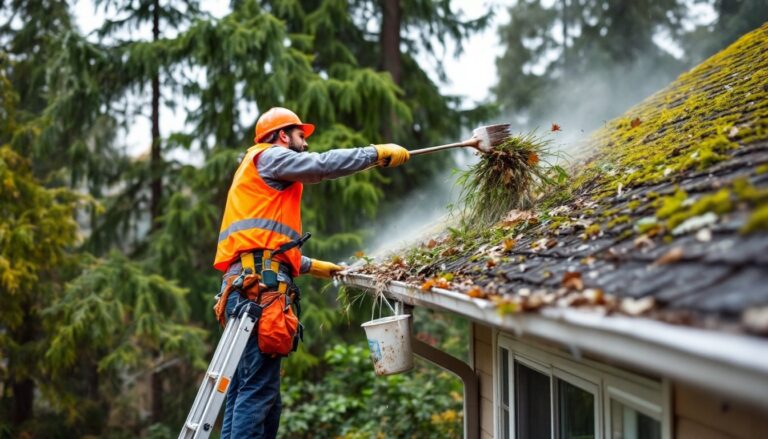
Start at the downspout end of each gutter run. Use your gutter scoop to pull out large debris, leaves, twigs, granules from roofing. Work slowly and deliberately: packed gutter debris can be heavy and may contain sharp objects or glass. Work toward the opposite end, filling your bucket as needed and emptying it when full.
Once you’ve removed the bulk, you’ll see what remains: a sludgy layer of decomposed leaves, dirt, and shingle granules. This is the grime that hardens and holds moisture. Scrub the gutter bottom with your brush or scoop, breaking up the buildup. Don’t worry about getting every speck, you’ll flush it next. Pay special attention to corners and inside the downspout outlet, where clogs often start.
If you encounter a blockage in the downspout itself, you can try to dislodge it by tapping the outside of the downspout with your hand or a rubber mallet. If that doesn’t work, you may need to disconnect the downspout at the elbow joint (usually held by one or two screws) and push a plumbing snake or garden hose through it. For tough clogs, this is when professionals earn their fee.
Flushing and Final Inspection
Once the visible debris is gone, connect your garden hose to an outdoor spigot and begin flushing the gutter. Start at the end opposite the downspout and work the water toward it, using the stream to push remaining sediment along. Watch how the water flows, it should move smoothly toward the downspout and exit freely. If water pools or backs up, there’s still a clog downstream: stop and clear it.
Flushing serves two purposes: it removes fine sediment you can’t scoop by hand, and it tests your work. If water flows fast and clean, you’re done. If you see water cascading over the edge, your gutter may have sags or inadequate slope, a separate issue that requires shimming or professional adjustment.
Finish by checking that your downspouts direct water at least 4-6 feet away from your foundation. If a downspout dumps water right next to your house, add an extension that slopes away from the structure, or install a splash block to break the fall and direct flow outward. This prevents the water from pooling and seeping into your basement or foundation.
When to Call Professional Gutter Cleaners in Philadelphia
DIY gutter cleaning is doable for most single-story homes and handy homeowners, but several situations warrant calling a pro. If your home is two stories or taller, the risk of falling outweighs the savings, professional crews have equipment, insurance, and experience working at height. The average cost for professional gutter cleaning varies by location and home size, but it’s money well spent for safety.
You should also hire professionals if your gutters have standing seams, copper details, or historic materials that require special handling. Aluminum gutters are forgiving, but older steel or copper gutters can dent or develop leaks if handled roughly. Similarly, if you’ve discovered rust holes, separated seams, or sagging sections, that’s structural damage: get a contractor’s assessment before cleaning.
If you find mold, mildew, or a thick, cement-like crust of decomposed debris, professionals have access to chemical treatments and commercial-grade equipment that tackle these faster and safer than DIY methods. Extensive moss or algae growth on north-facing gutters is also easier for pros to address.
For Philadelphia homeowners managing multiple properties or busy schedules, professional gutter cleaners offer predictable timing. Many offer maintenance plans, seasonal cleanings on a fixed schedule so you never have to think about it again. Resources like ImproveNet can connect you with local contractors and help you compare estimates and services.